
Department of Electronics and Electrical Engineering
Indian Institute of Technology Guwahati
SCA Group · Department of EEE
We develop the algorithms behind intelligent autonomous machines — UAVs, smart power grids, robot swarms - and build the hardware platforms needed to test them.
The Systems, Control and Automation (SCA) Group brings together eight faculty members whose work spans mathematics of dynamical systems to robots that have to fly, swim, dive and roll.
Foundational work in the group covers optimal control, robust and data-driven control, descriptor systems, model order reduction, cryptography and many more
The group develops and flight-tests control algorithms for unmanned aerial vehicles, ground robots, autonomous underwater vehicles and boats. Much of the testing is done on robots built in-house.
What happens when the plant is a fleet rather than a single vehicle: swarm of robots rather than one robot? These questions are explored by the group members working on multi-agent systems.
Once control loops close over a network, the network becomes part of the plant. The group studies resilient and networked control, state estimation under attack, and the security layer itself.
The group works on coordination of distributed energy resources to absorb the intermittency of solar and wind, and on robust energy management for battery–supercapacitor electric vehicles and renewable-integrated charging stations.
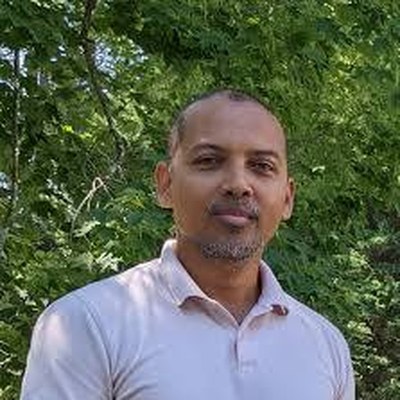
Professor
Smart grids and coordination of distributed energy resources; AI-based autonomous surface vehicles and IoT for environmental monitoring.
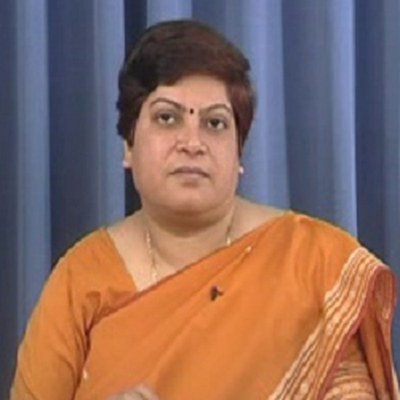
Professor
Robust and adaptive control with applications in robotics and flight control; energy management for electric vehicles and renewable-integrated charging stations.
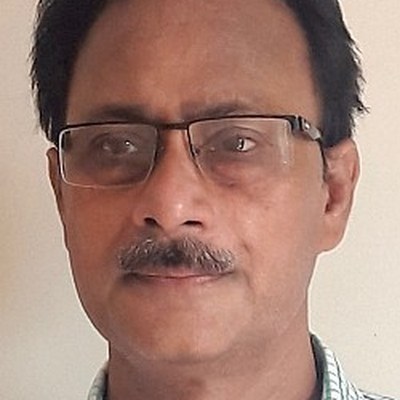
Professor
Relay-based identification and autotuning of PID controllers; cascade control for integrating and unstable time-delay processes; closed-loop system identification.
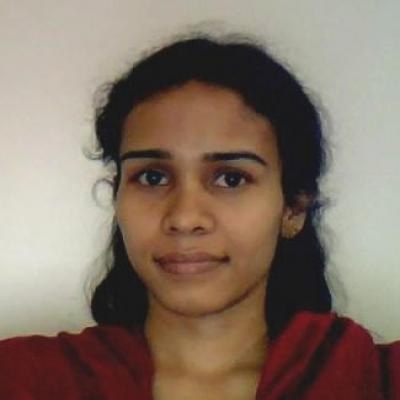
Professor
Adaptive and learning-based control; mobile robots, UAVs and robotic manipulators; consensus in multi-agent systems and resilient control of cyber-physical systems.
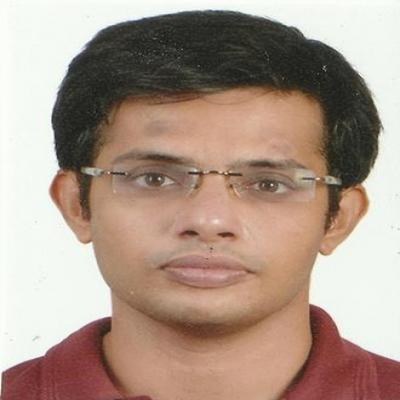
Professor
Networked control and H∞ optimization over lossy channels; cryptography, finite fields and post-quantum schemes for secure cyber-physical systems.
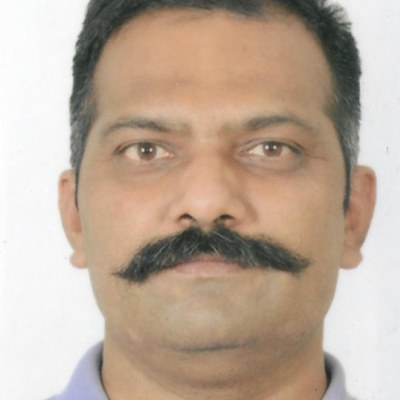
Associate Professor
Sampled-data system theory and H∞ optimization; model order reduction; tensor methods and machine learning for speech, signals and healthcare.
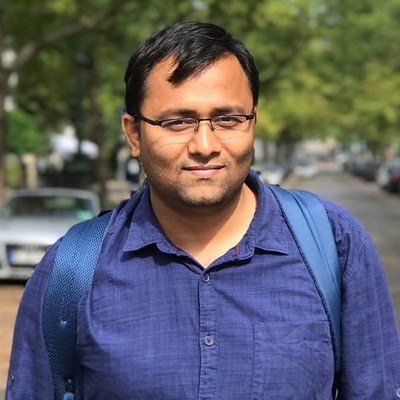
Assistant Professor
Optimal and data-driven control; descriptor systems and model order reduction; control of UAVs, ground and underwater vehicles, swarm drones and robotic manipulators.
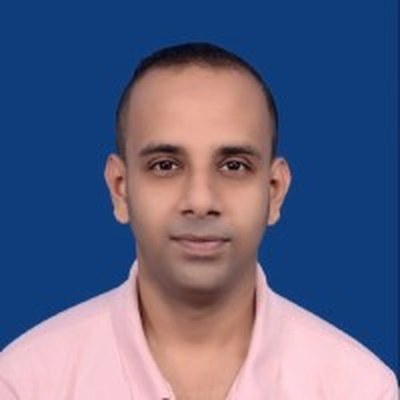
Assistant Professor
Negative-imaginary systems theory, passivity and dissipativity; cooperative and distributed control of multi-robot systems; vibration control of flexible structures.
We supervise Ph.D. and M.Tech. students across every area listed above, and we are open to collaborations with academic groups and with industry. Write to any member whose work overlaps with yours.