Laboratory Instruments

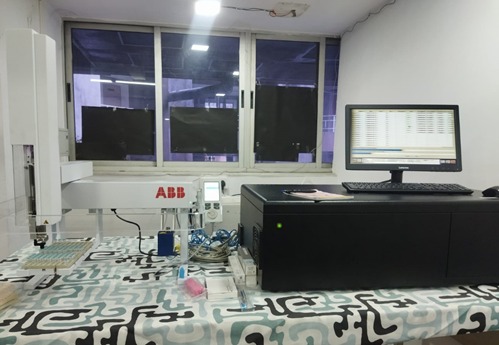
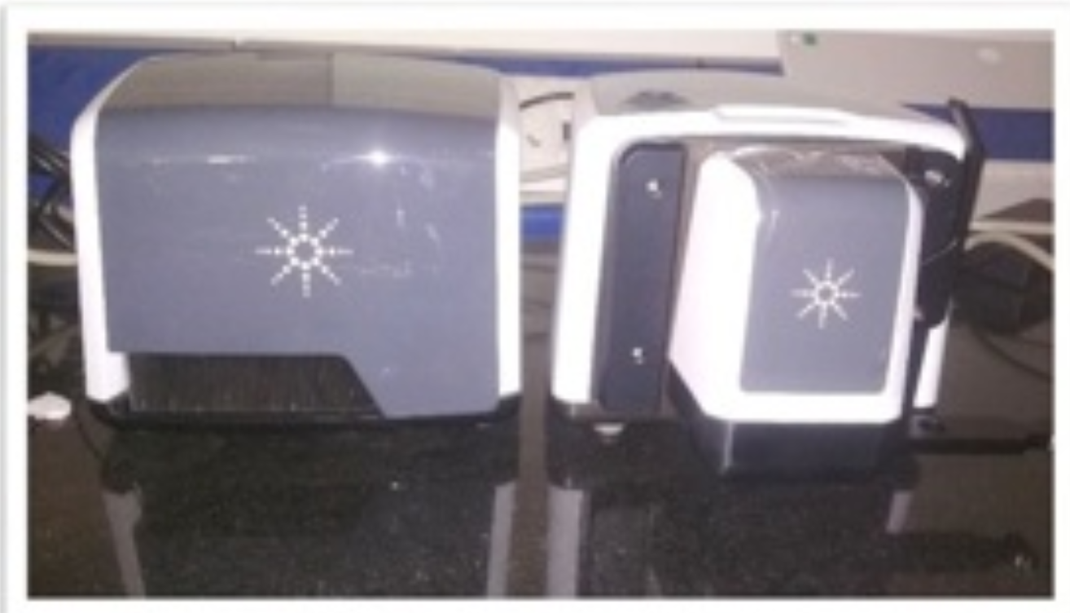
Triple Water Isotope Analyser for isotope ratio measurements

Triple Water Isotope Analyser

A Triple Water Isotope Analyser is a high-precision instrument used to measure the relative abundance of isotopes in a sample. These instruments play a crucial role in geochemistry, environmental science, and forensics by enabling water source tracing, carbon cycle analysis, and age determination of materials.

Request Access / Book Instrument
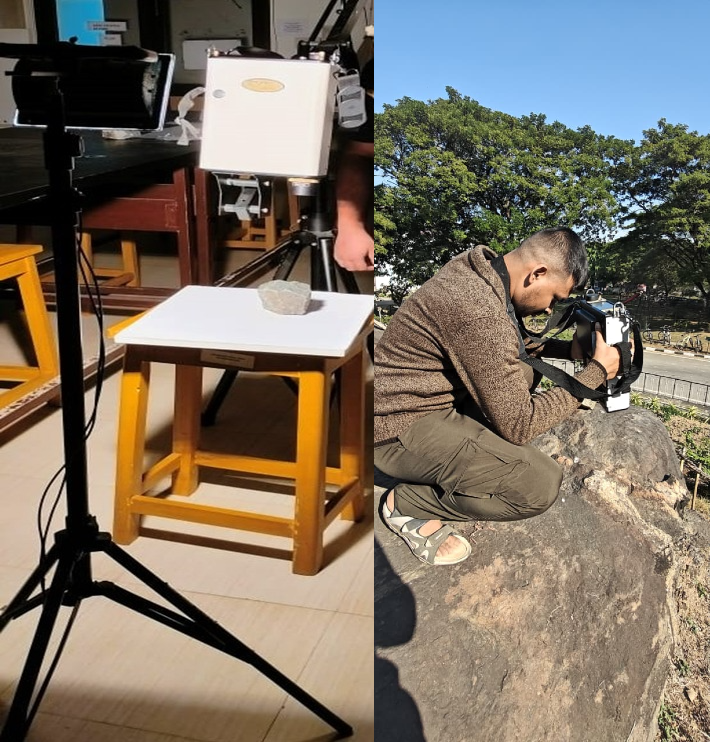
VIS-NIR field spectrometer for portable spectral analysis

VIS–NIR Spectrometer

The VIS–NIR Spectrometer operates in the Visible and Near-Infrared wavelengths to analyze the interaction of light with matter. It allows for rapid, non-destructive analysis of chemical composition in fields ranging from soil science to food quality control.

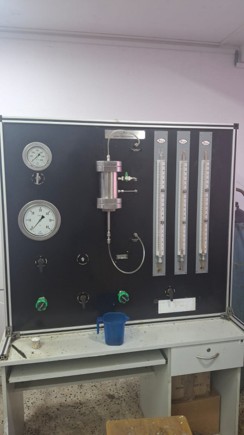
Permeameter instrument for fluid flow analysis in rocks

Permeameter

The permeameter is a laboratory device designed to measure the hydraulic conductivity of soil and rock samples. By measuring the flow rate of a fluid through a porous medium under a constant or falling head, it provides critical data for hydrogeological studies.

Steel porosimeter for high-pressure porosity analysis in tight rocks

Porosimeter (Steel)

This porosimeter is a robust instrument engineered to measure the effective porosity of consolidated samples. Using techniques such as gas expansion (Boyle's Law), it accurately determines the void volume fraction within a solid material, which is essential for reservoir characterization.

FT-IR Spectrometer for molecular fingerprinting

FT-IR Spectrometer

The FT-IR Spectrometer (Fourier Transform Infrared) is an analytical instrument used to identify organic, polymeric, and inorganic materials. It works by measuring the absorption of infrared radiation by a sample across different wavelengths, producing a unique molecular fingerprint that enables precise material characterization.

Geophone

Geophone

A geophone is a sensitive transducer that converts ground movement (velocity) into voltage. It is primarily used in reflection seismology to record energy waves reflected by subsurface geology, helping scientists map underground structures.

Rain gauge for measuring precipitation

Rain Gauge

A rain gauge is a fundamental meteorological instrument used to measure the amount of liquid precipitation over a specific period. Precise rainfall data is vital for climate monitoring, agricultural planning, and hydrological modeling.

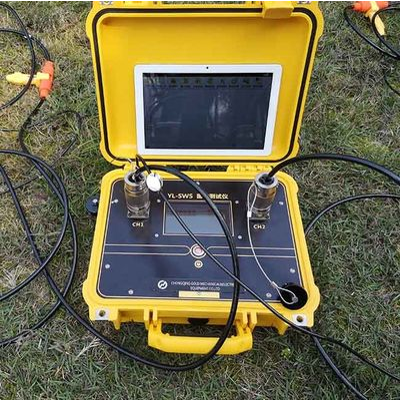
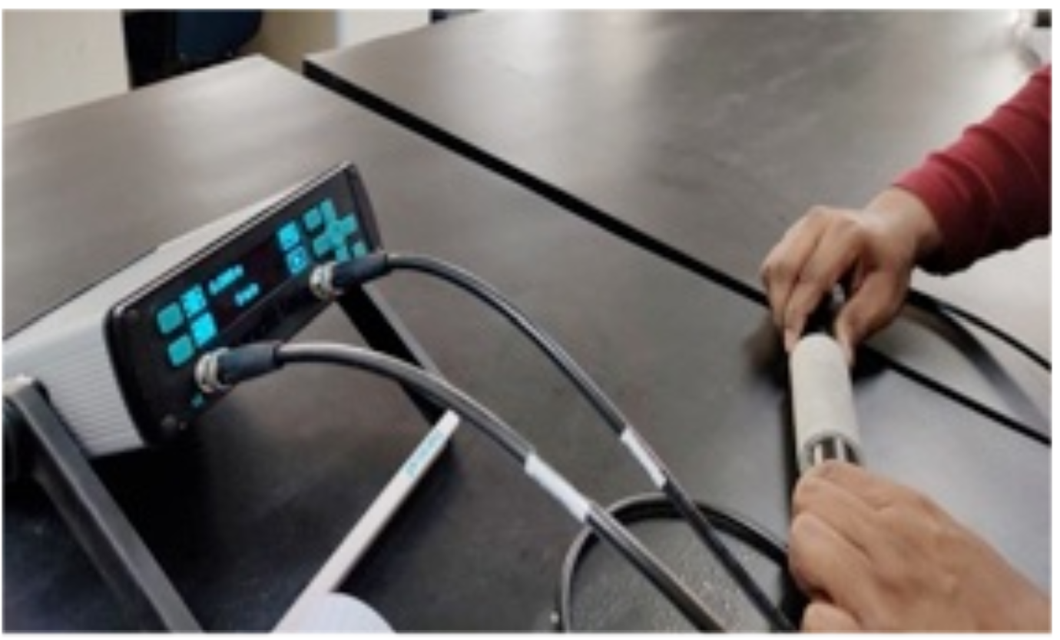
Ultrasonic Pulse Velocity testing instrument

Ultrasonic Pulse Velocity

The Ultrasonic Pulse Velocity (UPV) instrument is a non-destructive testing device primarily used for evaluating concrete and natural rocks. It measures the velocity of ultrasonic pulses passing through a material to assess quality, uniformity, and to detect internal cracks, voids, or structural defects.