MARS - Multi-core ARchitecture and System Lab
Focused on optimizing shared resources like LLC, NoC, and DRAM, the MARS Lab explores advanced memory scheduling and efficient cache designs to boost multi-core processor performance.
Welcome To MARS Lab
Advances in the VLSI process technology helped in realizing multi-core processors to exploit application-level parallelism. Multiple applications are running on these cores and the average demand per core for the shared resources like caches, interconnect and main memory is varying in nature. Overall system performance depends on how well one can utilize the shared resources of a multi-core processor, such as last level cache (LLC), network-on-chip (NoC), and main memory (DRAM). Managing shared resources in a highly parallel system is one of the most fundamental challenges that we face. Performance of a multi-core system depends on computation time, inter core communication delay and efficiency of on-chip memory systems.
In order to supply the data as quickly as possible to the processor, efficient cache designs along with various replacement policies are proposed to utilize the last level shared cache efficiently. Unfortunately, most of the techniques assume constant main memory latency in their evaluations. But the actual latency in retrieving data from main memory depends on various factors such as the congestion in the NoC, main memory scheduling mechanism, etc. Scheduling decisions taken at main memory may have significant impact on both latency as well as power consumption.
Message from Head
The Department offers B.Tech., M.Tech., Ph.D. and Dual (M.Tech. + Ph.D.) degrees. The Department has a comprehensive curriculum on topics related to all aspects of Computer Hardware and Software with an emphasis on practical learning. The course structure is up-to-date and includes courses on nascent topics to equip our students with the latest developments in Computer Science and Engineering.
The Department has state-of-the-art infrastructure and computing equipment supported by high speed Ethernet and wireless networks. Various student organisations like ACM Chapter, ACS Chapter, CSEA, Linux and Open Solaris Community are active throughout the year.
Our faculty members aim at delivering top class education blending their rich research experience with classroom teaching. The Department has undertaken many research projects funded both by multinationals and government agencies. For more information regarding research activities please visit the faculty and research pages.
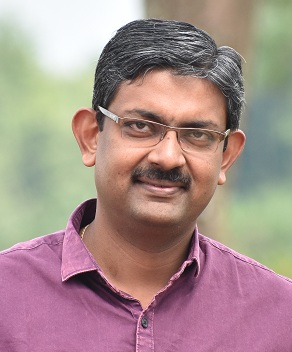
JOHN JOSE
Designation: Associate Professor
eMail: johnjose@iitg.ac.in
Address
Department of Computer Science & Engineering Indian Institute of Technology Guwahati Guwahati - 781039, Assam, India