Indian Institute of Technology GuwahatiElectronics & Electrical Engineering

GPU Workstations

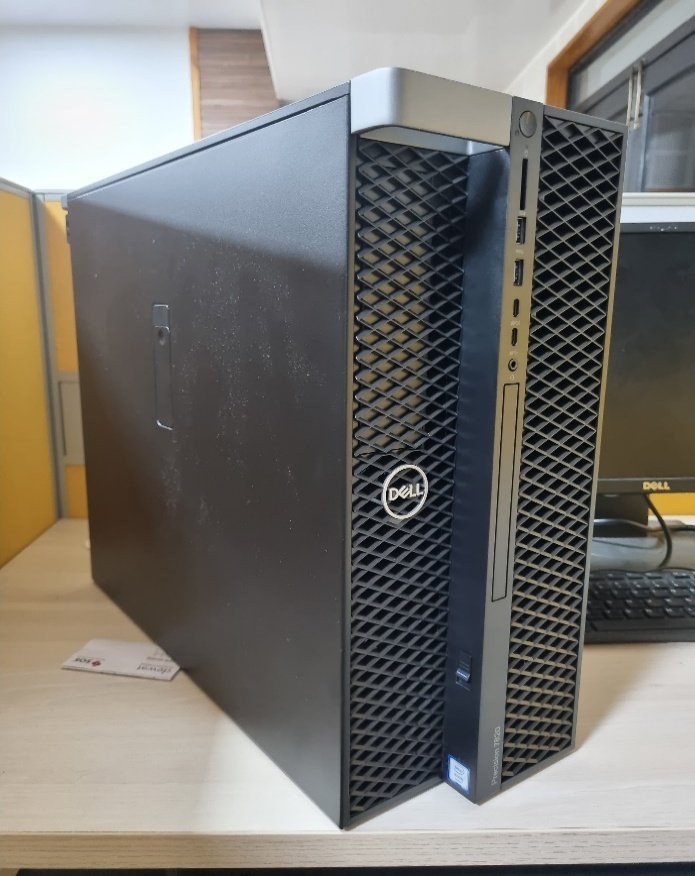
Dell Precision 7820 tower workstation

Dell Precision 7820 Tower

Processor
Intel Xeon Gold 5220R, 2.2 GHz (4.0 GHz Turbo), 24 cores, Hyper-Threading
Chipset
Intel C600 series
Memory
192 GB (6 × 32 GB) DDR4 2933 MHz RDIMM ECC, with 12 DIMM slots
Storage
3 × 2 TB SATA (7200 RPM) disk drives and a 1 TB PCIe NVMe solid-state drive for the operating system
Graphics card
Nvidia RTX A6000, 48 GB
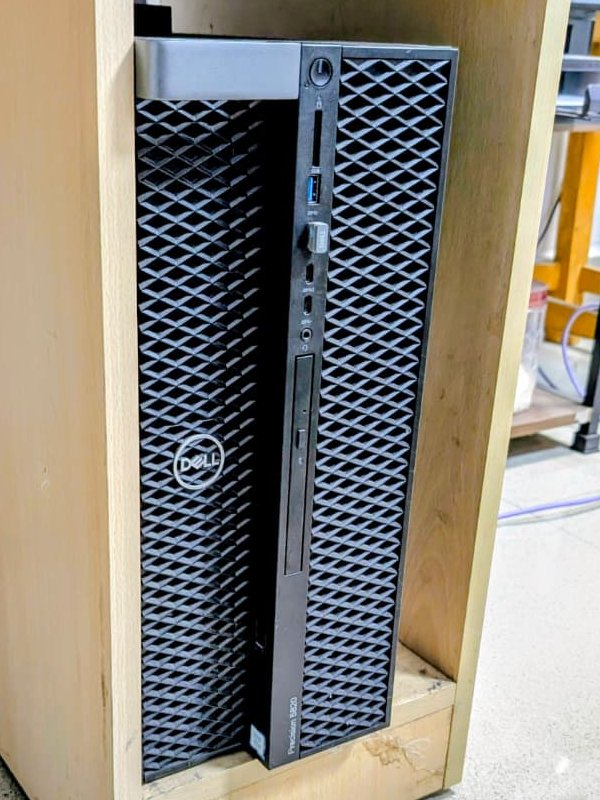
Dell Precision 5820 tower workstation

Dell Precision 5820 Tower

Processor
Intel Xeon W-2255, 3.7 GHz (4.7 GHz Turbo), 10 cores, Hyper-Threading
Chipset
Intel C422
Memory
64 GB ECC
Storage
1 TB M.2 PCIe NVMe solid-state drive and 3 × 2 TB SATA (7200 RPM) hard drives
Graphics card
Nvidia RTX A2000, 6 GB

Software-Defined Radio

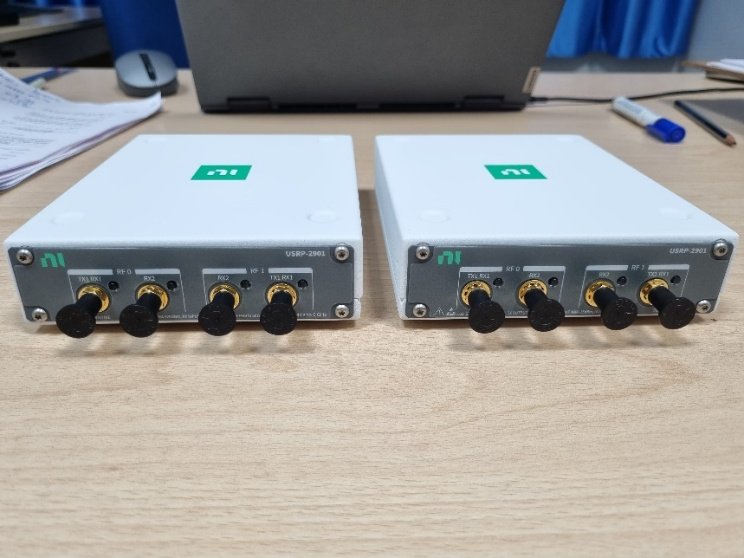
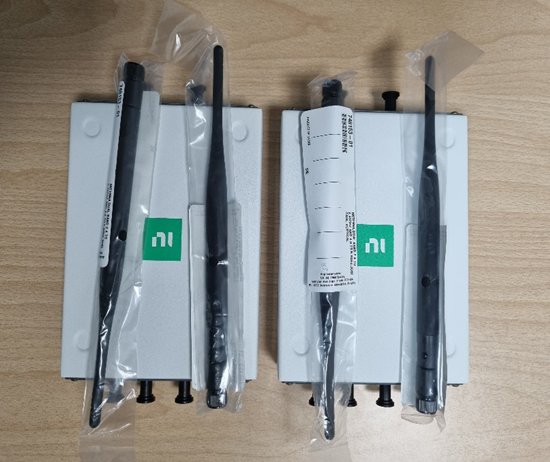
Two NI USRP-2901 software-defined radios, front panels showing the RF connectors Two NI USRP-2901 units seen from above, with Vert2450 vertical antennas

NI USRP-2901

The USRP-2901 is a tunable RF transceiver with full-duplex, MIMO operation. It offers bus-powered connectivity with USB 3.0 or USB 2.0.

Communications applications: White space; broadcast FM; public safety; land-mobile, low-power unlicensed device (ISM) bands; sensor networks; amateur radio; or GPS.

RF frequency range
70 MHz to 6 GHz
Output channels
2
Input channels
2
Input bandwidth
56 MHz (instantaneous)
FPGA
Spartan-6 LX150
Antenna
Vert2450 vertical antenna, dual band: 2.4–2.5 GHz and 4.9–5.9 GHz
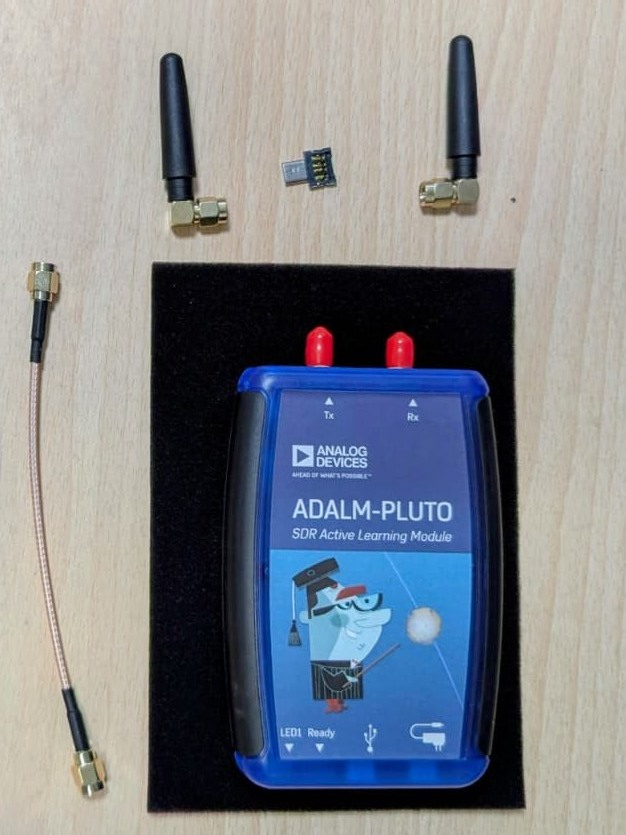
ADALM-PLUTO SDR active learning module with its two antennas and an SMA cable

ADALM-PLUTO (PlutoSDR)

ADALM-PLUTO Active Learning Module: Provides a platform for exploring the fundamentals of software-defined radio (SDR), radio-frequency (RF) systems, and wireless communications, enabling prototyping and experimental validation.

  • RF coverage from 325 MHz to 3.8 GHz
  • Up to 20 MHz of instantaneous bandwidth
  • Flexible rate, 12-bit ADC and DAC
  • One transmitter and one receiver, half or full duplex
  • MATLAB and Simulink support
  • libiio, a C, C++, C#, and Python API
  • USB 2.0 powered interface with Micro-USB 2.0 connector

Edge Devices and Sensing

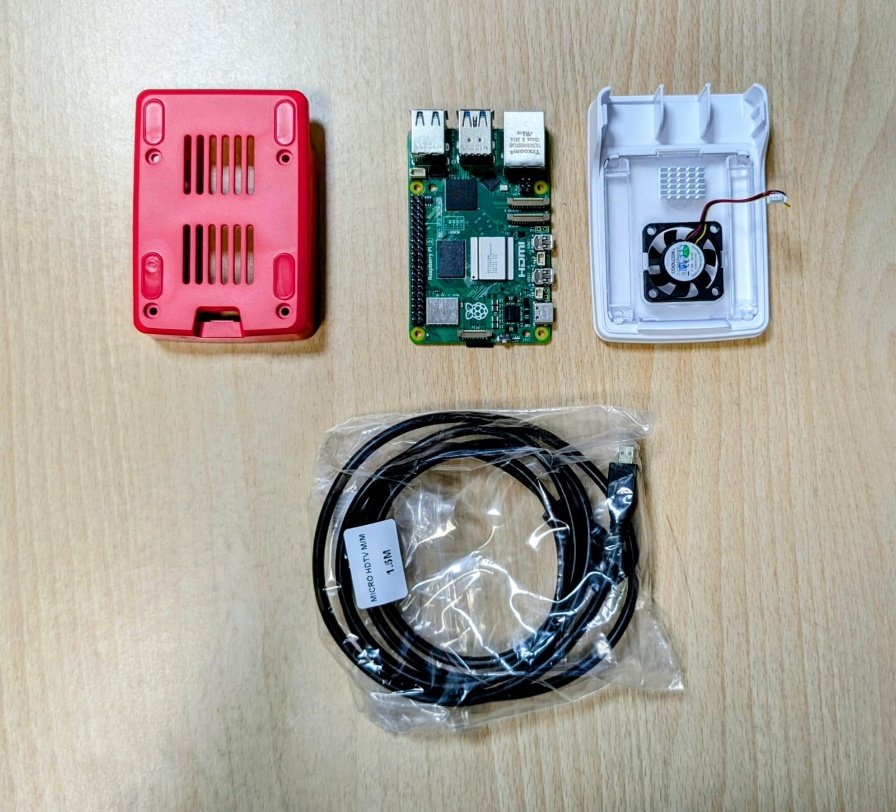
Raspberry Pi 5 board with its red and white case, cooling fan and a micro-HDMI cable

Raspberry Pi 5

The Raspberry Pi 5 is a high-performance single-board computer designed for advanced computing, IoT, and automation applications. It features a powerful 2.4 GHz quad-core processor with PCIe support and dual 4K display output for enhanced performance and expandability.

Processor
Quad-core ARM Cortex-A76 at 2.4 GHz
RAM
8 GB
Display
Dual HDMI with 4K at 60 Hz output
Connectivity
Wi-Fi, Bluetooth 5.0, Gigabit Ethernet
Expansion
PCIe 2.0 interface for SSD and peripherals
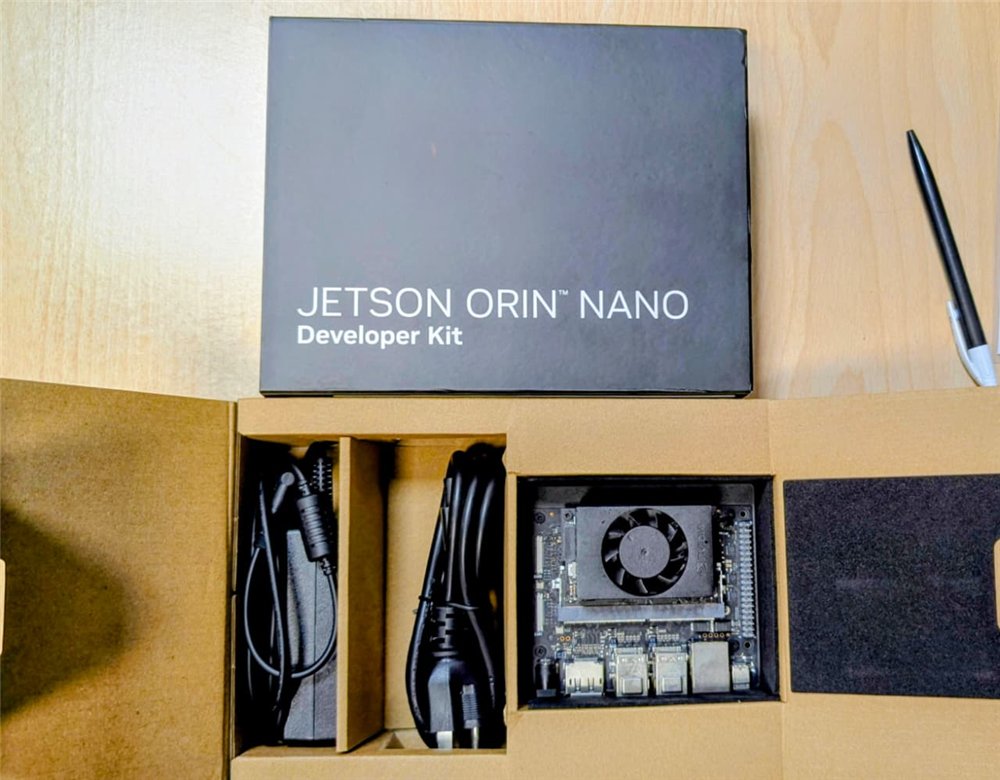
NVIDIA Jetson Orin Nano developer kit in its box, with the board and power supply

NVIDIA Jetson Orin Nano Super Developer Kit

The NVIDIA Jetson Orin Nano Super Developer Kit is a compact yet powerful computer that redefines generative AI for small edge devices. It delivers up to 67 TOPS of AI performance to seamlessly run the most popular generative AI models, like vision transformers, large language models, vision-language models, and many more. It provides developers, students, and makers with the most affordable and accessible platform with the support of the NVIDIA AI software and a broad AI software ecosystem.

AI performance
67 INT8 TOPS
GPU
NVIDIA Ampere architecture with 1024 CUDA cores and 32 tensor cores
CPU
6-core Arm Cortex-A78AE v8.2 64-bit CPU
Memory
8 GB 128-bit LPDDR5, 102 GB/s
Storage
Supports SD card slot and external NVMe
Power
7 W – 25 W
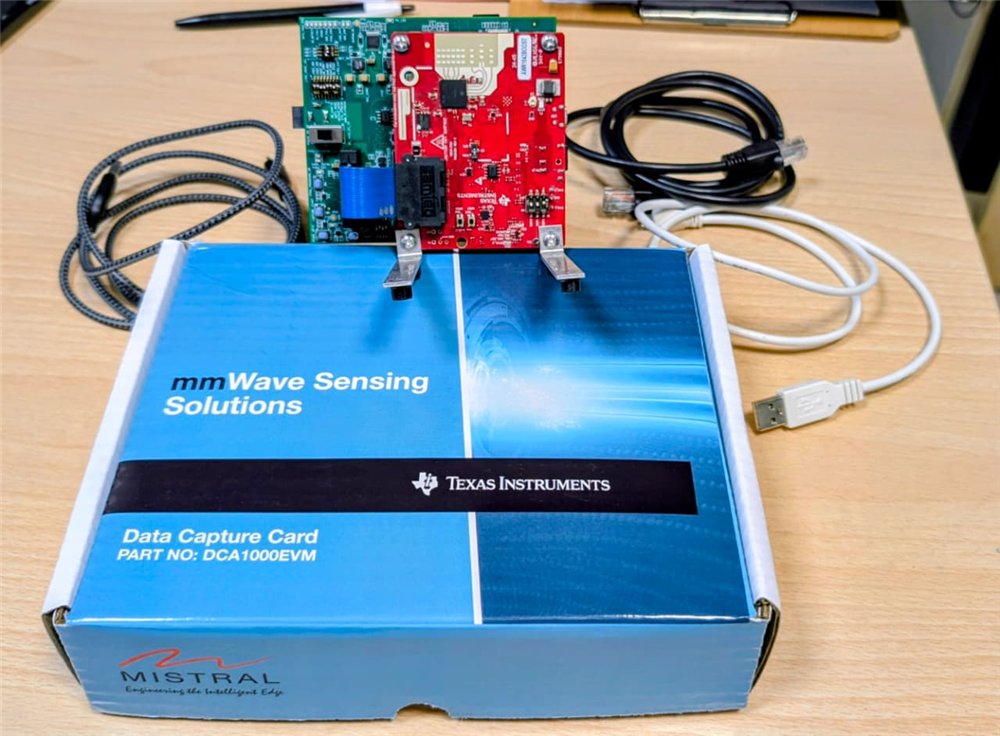
AWR1843BOOST mmWave radar sensor board mounted on a Texas Instruments data capture card

AWR1843BOOST mmWave Radar Sensor

AWR1843 single-chip 76-GHz to 81-GHz automotive radar sensor evaluation module.

This kit is supported by mmWave tools and software, including mmWave Studio (MMWAVE-STUDIO) and the mmWave software development kit (MMWAVE-SDK).

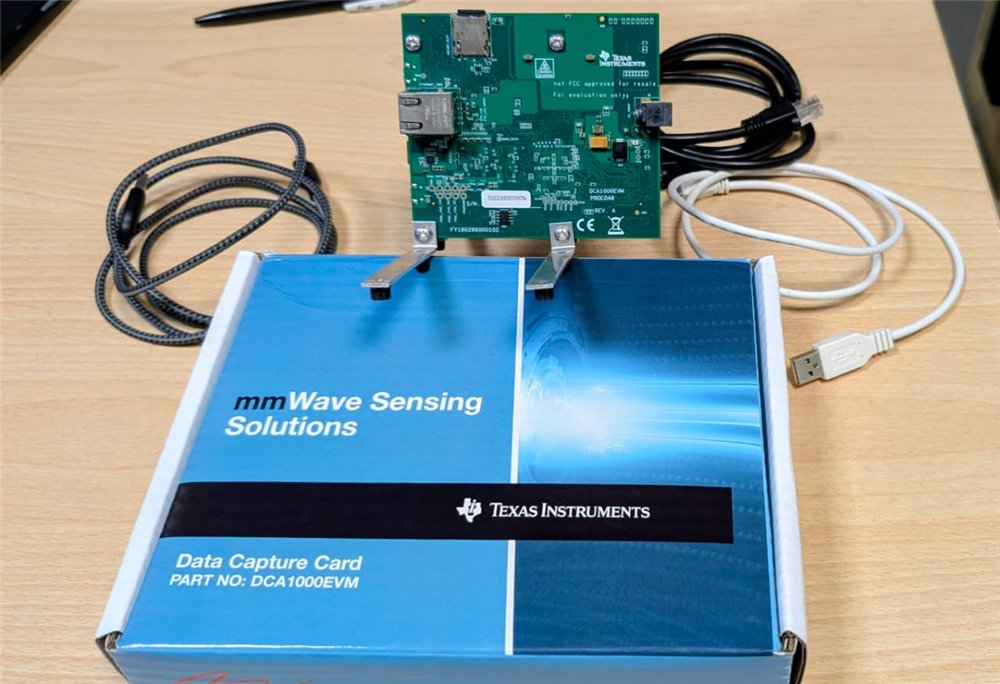
Texas Instruments DCA1000EVM data capture card for mmWave sensing

DCA1000EVM Real-Time Data-Capture Adapter

The DCA1000 evaluation module (EVM) provides real-time data capture and streaming for two- and four-lane low-voltage differential signaling (LVDS) traffic from TI AWR and IWR radar sensor EVMs. The data can be streamed out via 1-Gbps Ethernet in real time to a PC running the MMWAVE-STUDIO tool for capture, visualization, and then can be passed to an application of choice for data processing and algorithm development.