Research Interests
Next-Generation Wireless Communications
Integrated Sensing and Communication
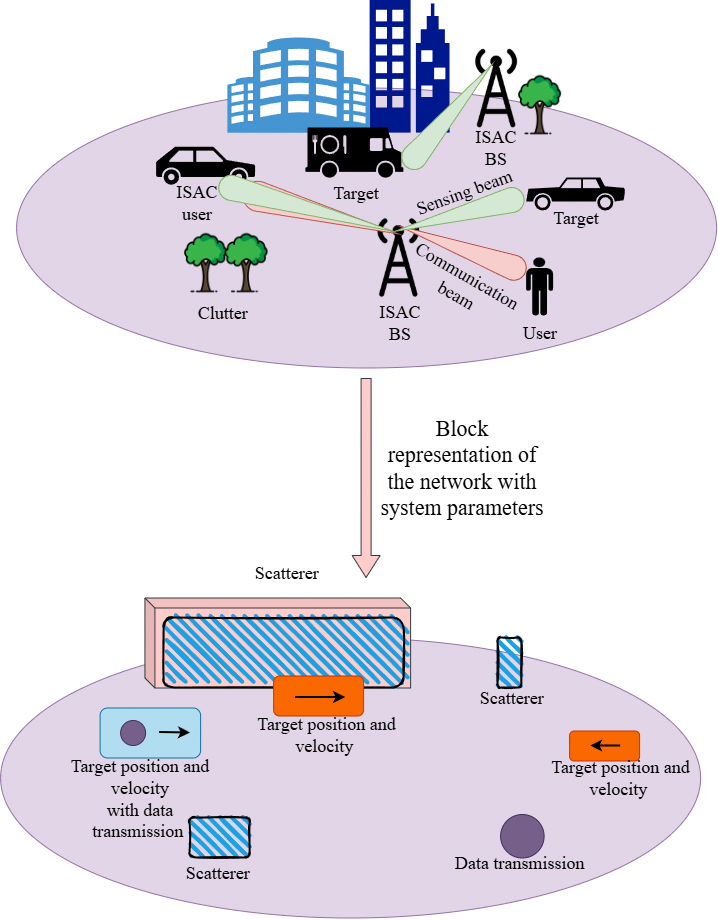
Integrated sensing and communication (ISAC) is envisioned as a promising technology for next-generation wireless networks. It enables communication and radar sensing to share a common platform and utilize dual-functional waveforms to perform both functionalities simultaneously, thereby improving spectrum and hardware efficiency.
ISAC enables data transmission to users while simultaneously performing sensing tasks such as environmental monitoring, target detection, human activity monitoring, gesture recognition, etc.
Research focus
- Spectrum sharing between radar and communication systems:
(i) Development of dual-function RF systems integrating radar sensing and communication functionalities.
(ii) Investigation of the coexistence of separate radar and communication systems under mutual interference. - Optimal beamforming and resource allocation: Development of optimal beamforming and resource allocation schemes for ISAC and coexistence systems under communication-centric, radar-centric, and joint communication–radar optimization frameworks.
- Optimal waveform design: Development of optimal ISAC waveform design to balance communication and sensing performance while satisfying the requirements of both functionalities.
- Performance analysis: Investigating radar sensing and communication performance and characterizing the trade-offs between the two functionalities.
Multiple Access Techniques
6G communication systems are envisioned to support a massive number of connected devices and users, resulting in increasingly dense and congested network environments. In such scenarios, interference management is expected to be a key challenge in meeting the performance requirements of 6G. To address these challenges, we investigate advanced multiple-access techniques, particularly non-orthogonal multiple access (NOMA) and rate-splitting multiple access (RSMA), which enable multiple users to share the same time-frequency resources efficiently.
Research focus
- Developing resource-efficient NOMA and RSMA techniques to enhance spectral efficiency, reduce latency, improve energy efficiency and reliability, and support massive connectivity in next-generation wireless networks.
- Exploring applications in diverse and challenging 6G scenarios, including overloaded and underloaded networks, integrated sensing and communication (ISAC), radar–communication coexistence, and intelligent reflecting surface (IRS)-assisted systems.
- Designing robust beamforming and resource allocation strategies that account for practical impairments, including imperfect channel state information (CSI), imperfect successive interference cancellation (SIC), and hardware impairments, to enable reliable and efficient operation under realistic wireless conditions.
Near-Field Communication and Signal Processing for 6G Wireless Networks
The evolution of 6G wireless technology is driving the demand for high-speed, energy-efficient, and ultra-reliable data transmission, supported by emerging technologies such as extremely large antenna arrays, millimeter-wave (mmWave) and terahertz (THz) communications, and reconfigurable intelligent surfaces (RISs). In this context, near-field communication is emerging as an important paradigm for future wireless networks. Unlike conventional far-field communication, where electromagnetic waves are typically modeled as planar wavefronts, the large antenna apertures and high operating frequencies envisioned for 6G systems can bring users into the near-field region, where electromagnetic waves exhibit spherical wavefronts.
Research focus
- Developing signal processing techniques for near-field communications, including accurate channel modeling, near-field beamforming and beam focusing, efficient channel estimation, and enhanced physical-layer security and cell-edge connectivity.
- Exploiting the additional spatial degrees of freedom offered by the near-field region to enhance spectral efficiency, energy efficiency, and user localization in next-generation wireless systems.
Wireless Sensing using Sub-6 GHz and Millimeter-Wave Signals
6G wireless networks are envisioned to integrate sensing and communication functionalities, enabling wireless systems to sense their surrounding environments using communication signals or dedicated sensing waveforms. This emerging research area, known as integrated sensing and communication (ISAC), aims to enable wireless networks to perform sensing tasks alongside data transmission.
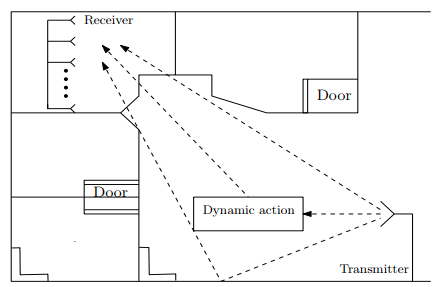
Wireless sensing can support applications such as target detection and parameter estimation, human activity and gesture recognition, non-human movement detection, localization, and tracking, without requiring dedicated sensors or cameras. By analyzing changes in received radio-frequency (RF) signals caused by objects, movements, or activities in the environment, relevant sensing information can be extracted from the wireless channel.
Research focus
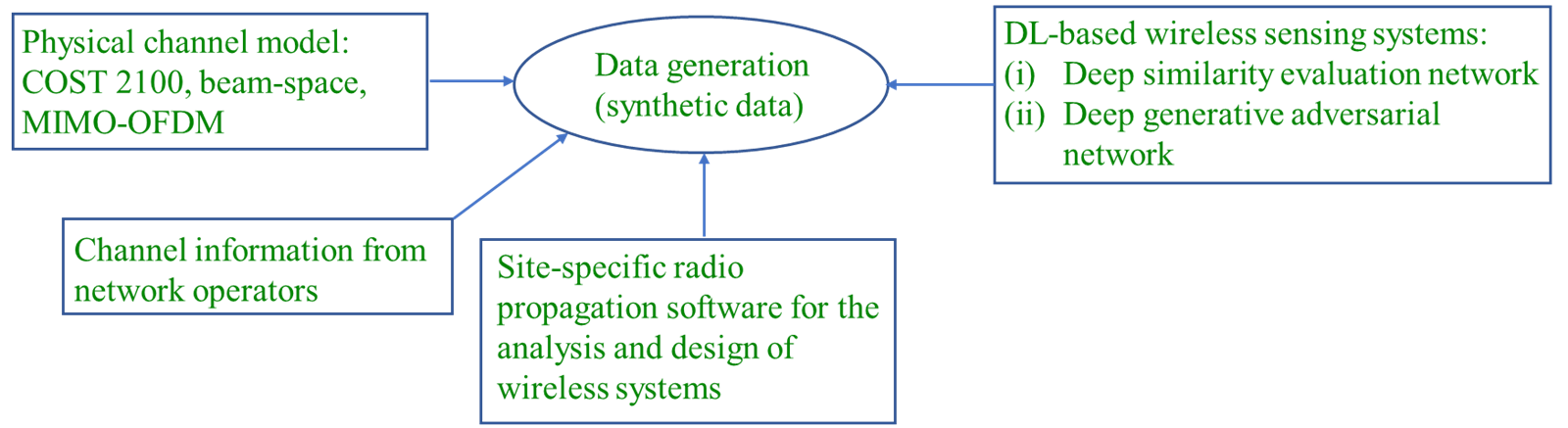
- Model-based approach: Developing physical channel models for wireless systems in which the base station (access point) is equipped with different antenna array configurations, such as uniform linear arrays (ULAs) and uniform planar arrays (UPAs).
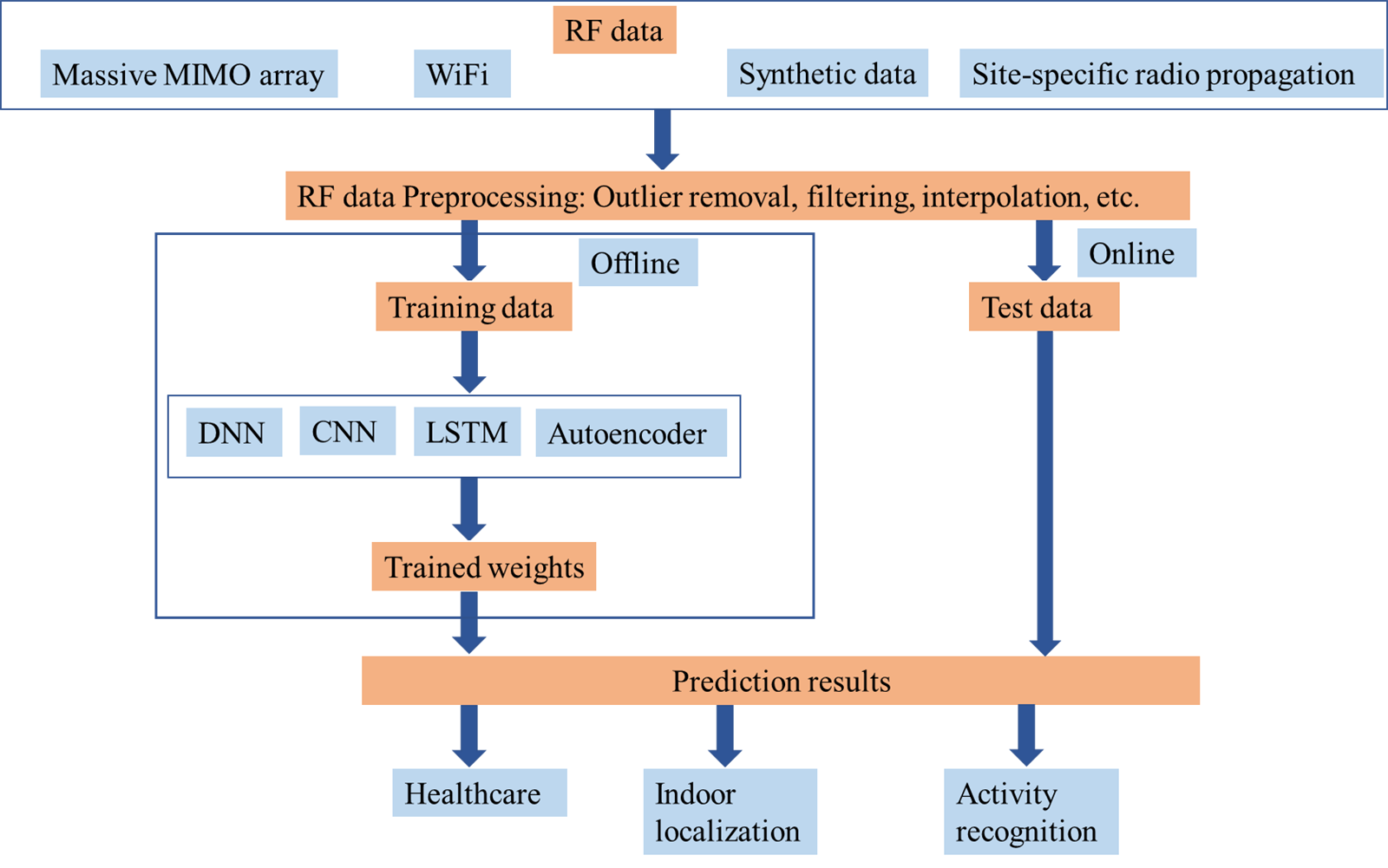
- Data-driven approach: Analyzing RF datasets for wireless activity sensing to extract and characterize spatial and propagation-related features, including channel variations, line-of-sight and non-line-of-sight conditions, and interference patterns.
- Modeling and characterization across frequency bands: Developing physical channel models, conducting experiments to collect RF datasets for specific application scenarios, and designing signal processing techniques and ML algorithms for sub-6 GHz and millimeter-wave frequency bands. Furthermore, comparing the advantages and limitations of these bands in terms of sensing resolution, accuracy, range, data requirements, and the computational complexity of ML algorithms.
AI-Enabled Wireless and Healthcare Applications
Deep Learning for Wireless Communications
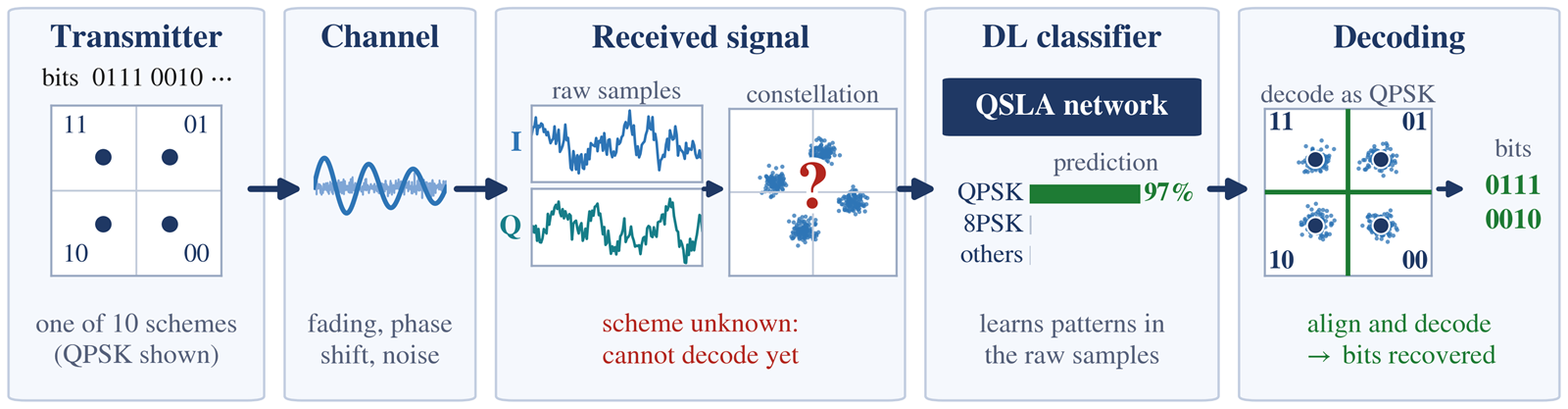
Deep learning (DL) has demonstrated significant potential across diverse application domains, including computer vision, speech processing, natural language processing, and healthcare. Motivated by these advances, there is growing interest in leveraging artificial intelligence (AI) and DL to address challenging problems in wireless communications. The increasing availability of computational resources and large-scale radio-frequency (RF) datasets has enabled DL-based approaches to learn complex representations and, in some applications, develop end-to-end communication strategies.
Traditionally, wireless communication systems have relied on model-based signal processing and optimization techniques. However, the increasing complexity of next-generation wireless networks, coupled with the limitations of conventional analytical models in capturing complex propagation environments and system dynamics, has motivated growing interest in data-driven and model-assisted DL techniques.
Research focus
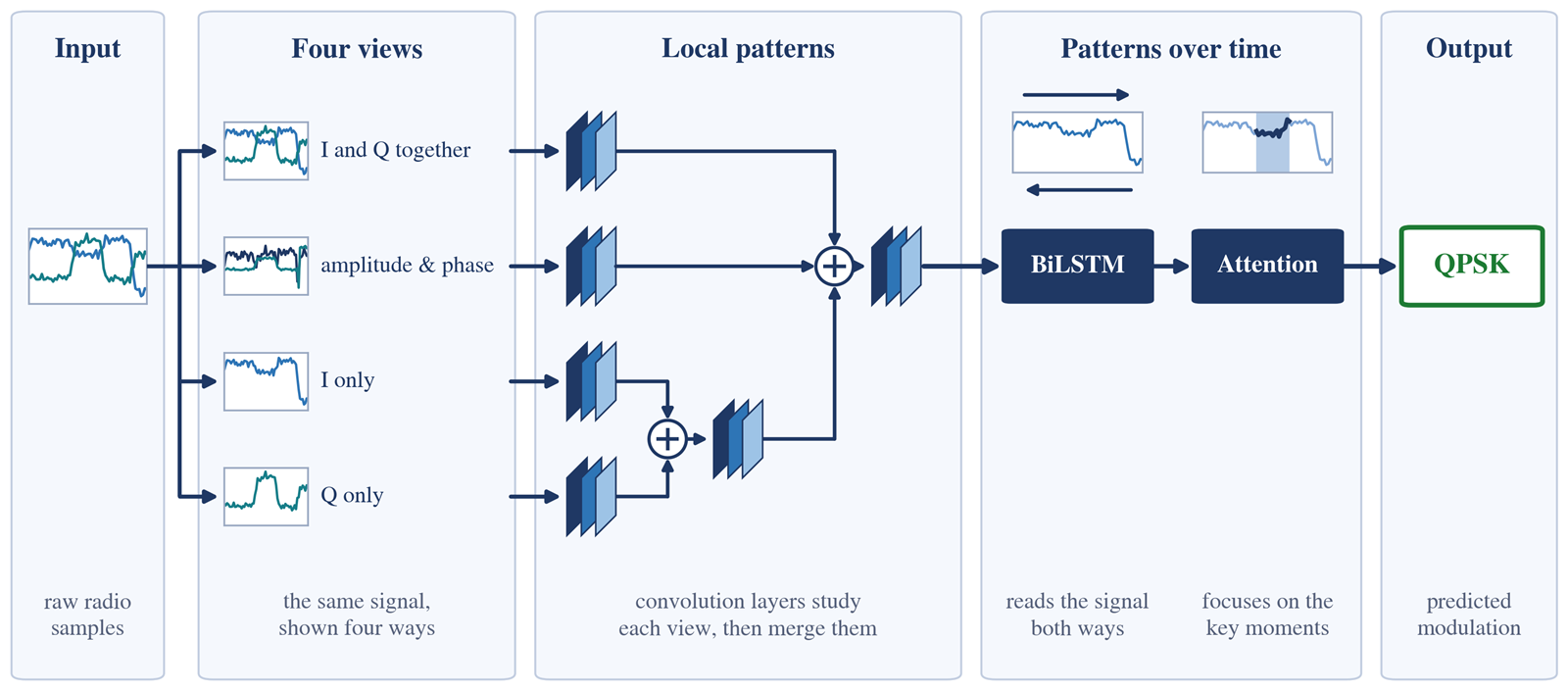
- Developing AI- and DL-based techniques for intelligent, reliable, and efficient wireless communication systems, with particular emphasis on signal processing, channel estimation, symbol detection, beamforming, resource allocation, and emerging 5G/6G applications.
Model Optimization for Edge Deployment
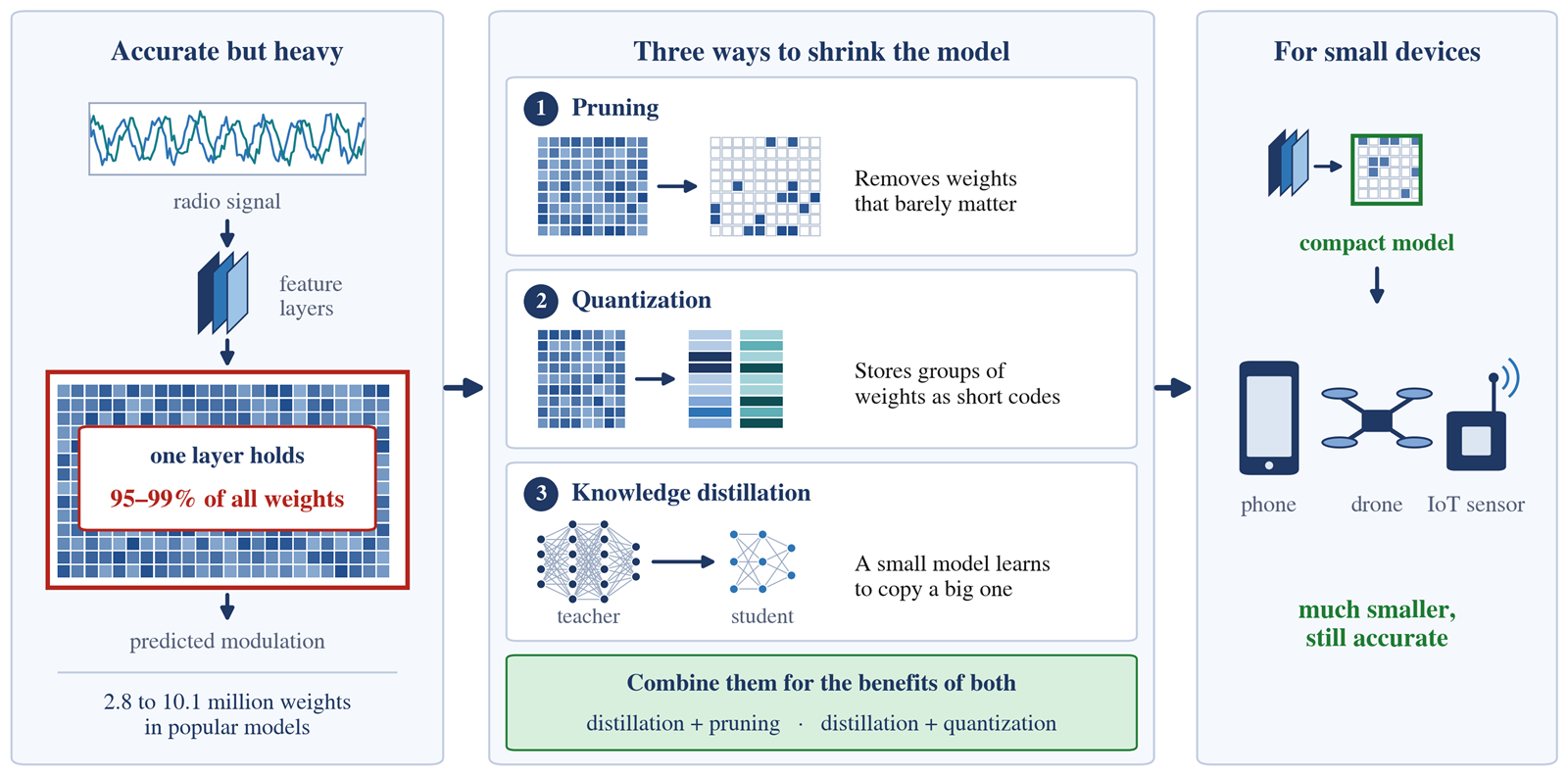
DL-based models often achieve high accuracy using complex architectures with hundreds of thousands to millions of parameters and large-scale training datasets. However, their computational, memory, and power requirements can pose significant challenges for deployment on resource-constrained edge devices. Model optimization and compression techniques can reduce computational complexity, memory footprint, and energy consumption while preserving model performance, enabling efficient deployment on edge devices without necessarily modifying the underlying network architecture.
Research focus
- DL model compression: Developing model compression techniques, including pruning, quantization, and knowledge distillation, to reduce model size, computational complexity, and memory requirements while maintaining model performance.
- Lightweight DL architectures: (i) Designing computationally efficient DL models suitable for resource-constrained wireless and edge devices; (ii) Developing and deploying optimized DL models for low-latency, real-time inference on edge computing platforms.
- Model efficiency trade-offs: (i) Investigating the trade-offs among model accuracy, computational complexity, memory requirements, and energy consumption; (ii) Evaluating model performance under practical wireless conditions and resource constraints.
AI-Enabled Biomedical and Healthcare Applications
Machine learning (ML) offers powerful tools for extracting patterns from complex and heterogeneous biomedical data, with significant potential for disease detection, risk prediction, and personalized healthcare. Our research explores ML-based approaches for breast cancer detection and risk assessment using genetic, clinical, and behavioral data. A key focus is on developing robust and generalizable models by integrating publicly available datasets, clinical data, and experimentally generated data. To address challenges associated with limited, imbalanced, and demographically diverse datasets, we investigate synthetic data generation and generative learning techniques for data augmentation, with the aim of improving model robustness and generalization across diverse populations.
Research focus
- Synthetic data generation: Developing generative learning approaches to generate diverse synthetic biomedical datasets, addressing data scarcity and class imbalance.
- ML-based disease detection: Developing ML models for breast cancer detection using genetic markers and clinical data.
- Disease risk prediction: Developing ML-based models to estimate disease risk using clinical markers and behavioral factors in healthy individuals.
Security for DL-Based Wireless Systems
Adversarial Machine Learning
The integration of artificial intelligence (AI) and deep learning (DL) into beyond-5G (B5G) and 6G wireless systems enables intelligent solutions for challenging tasks such as signal detection, classification, prediction, channel estimation, beamforming design, resource allocation, and system optimization. By learning from radio-frequency (RF) data, AI-driven approaches can capture complex patterns and adapt to dynamic wireless conditions.
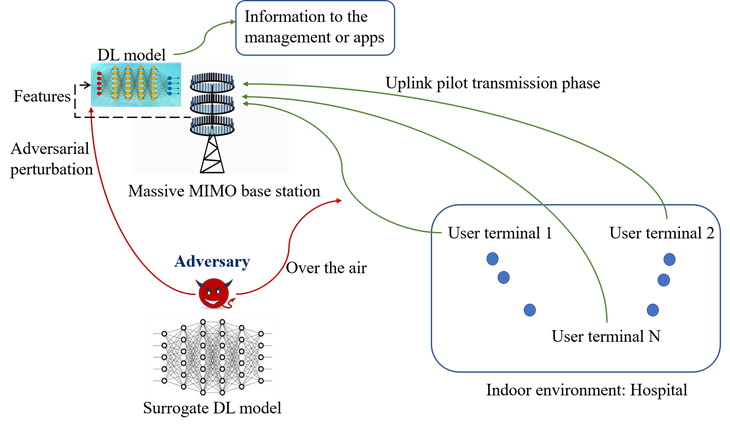
However, deploying AI-driven wireless systems also introduces new security vulnerabilities. In particular, the broadcast nature of wireless transmissions exposes the RF interface to potential attacks involving carefully crafted malicious signals, which can compromise the reliability and security of intelligent wireless systems.
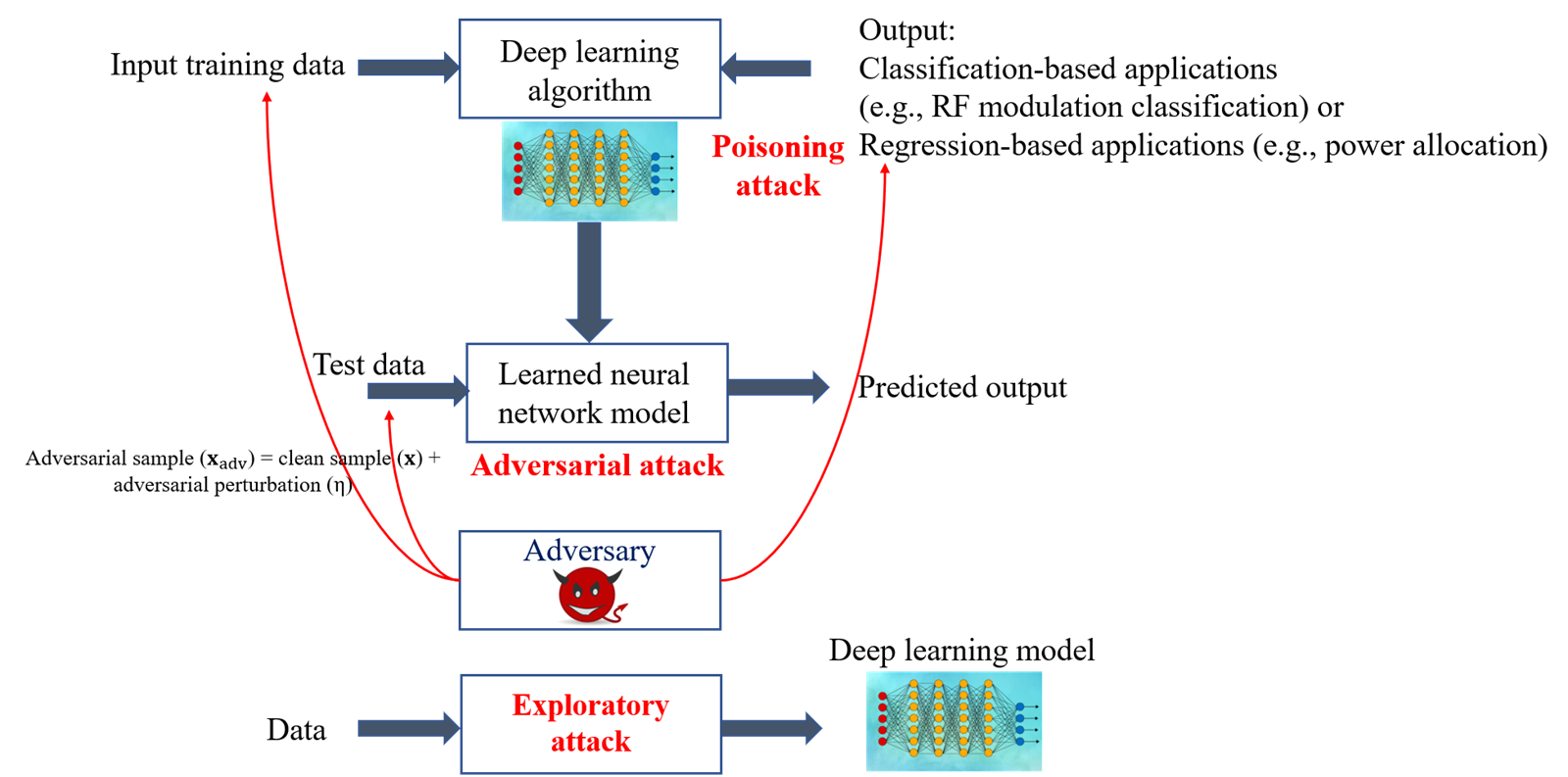
Adversarial machine learning investigates these vulnerabilities by studying how DL models can be attacked and manipulated, as well as how they can be protected to achieve robust and trustworthy wireless communication. Key threats include adversarial perturbations, data poisoning, spoofing, and backdoor attacks, which can lead to misclassification, unauthorized access, or disruption of wireless services. These threats are relevant across a range of applications, from Internet of Things (IoT) networks to drone communications and defense systems.
Research focus
- Attacks on DL-based wireless systems: Developing practical attack mechanisms to investigate and evaluate vulnerabilities in DL-based wireless systems, including classification and regression tasks. Prominent threats include adversarial perturbations designed to induce misclassification, data poisoning intended to corrupt training datasets, spoofing attacks that impersonate legitimate transmitters, and backdoor attacks that embed hidden triggers in models to cause targeted incorrect predictions.
- Channel-aware and transferable adversarial attacks: Investigating perturbations that account for wireless channel effects and designing transferable attacks that remain effective across different DL models under practical over-the-air conditions.
- Robust and secure AI for wireless communications: Developing effective defense techniques to improve the robustness, reliability, and security of DL-based wireless systems against attacks. Investigating vulnerabilities and developing trustworthy AI solutions for emerging applications such as IoT, UAV/drone communications, and other mission-critical wireless systems.
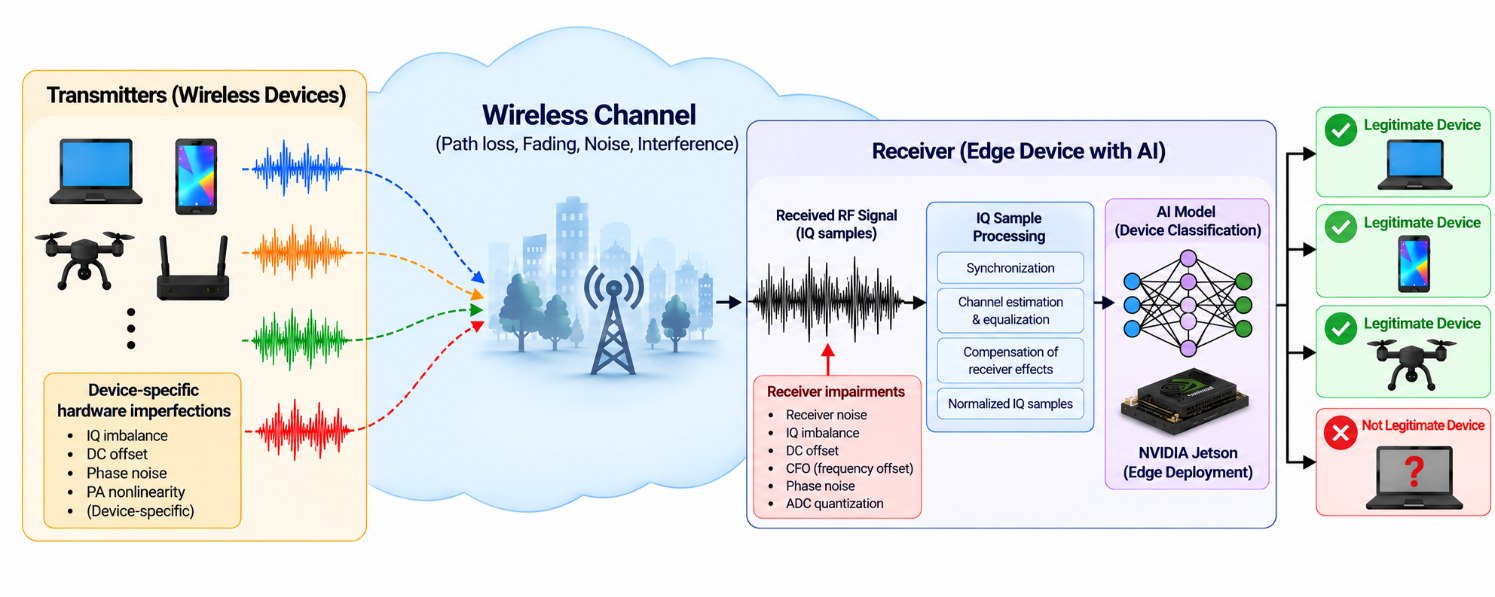
Edge-Deployable RF Fingerprinting for Secure Wireless Systems
Research focus
- Robust RF fingerprinting: Designing lightweight and compressed deep learning (DL)-based RF fingerprinting frameworks for accurate and reliable wireless device identification under realistic operating conditions.
- Edge AI for secure authentication: Developing and implementing real-time RF fingerprinting techniques on edge GPU platforms, such as NVIDIA Jetson, to enable scalable, secure, and low-latency physical-layer device authentication.