Media Lab
Department of Design, IIT Guwahati
Projects / Speculative Design / Re-Focus Labs
ACS-P: Restoring Attentional Homeostasis in an Overstimulated World
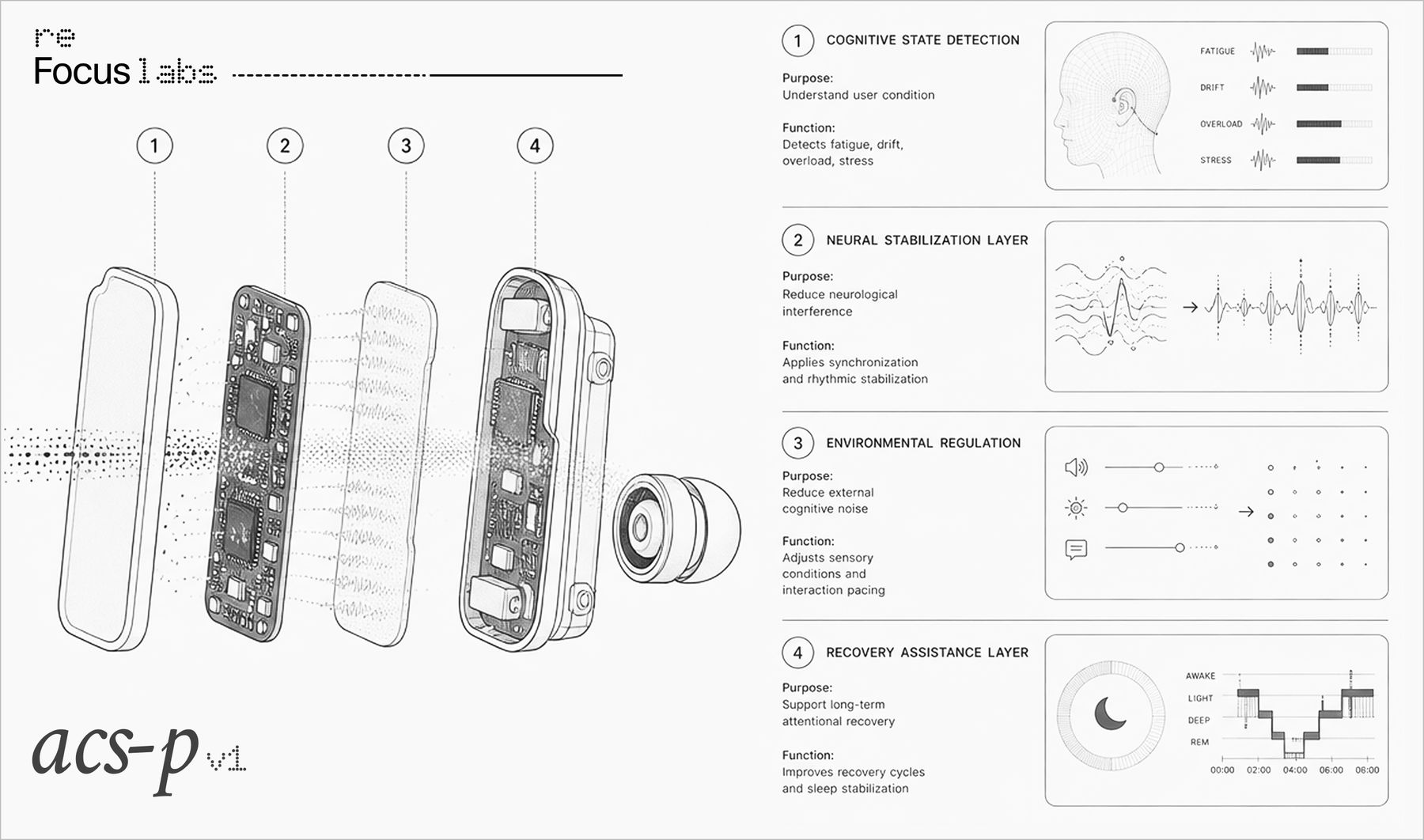
ACSW exists as speculative design project exploring future relationships between cognition, overstimulation, AI-assisted learning, and attentional support technologies.
Rather than predicting the future, the project constructs a believable speculative world examining how hyperconnected societies may gradually reshape human cognition over time. Through narrative worldbuilding, industrial design, speculative neuroscience, and fictional product ecosystems, the project explores questions surrounding cognitive preservation, AI dependency, attentional economies, and the future of learning inside increasingly accelerated environments.
When focus became luxury
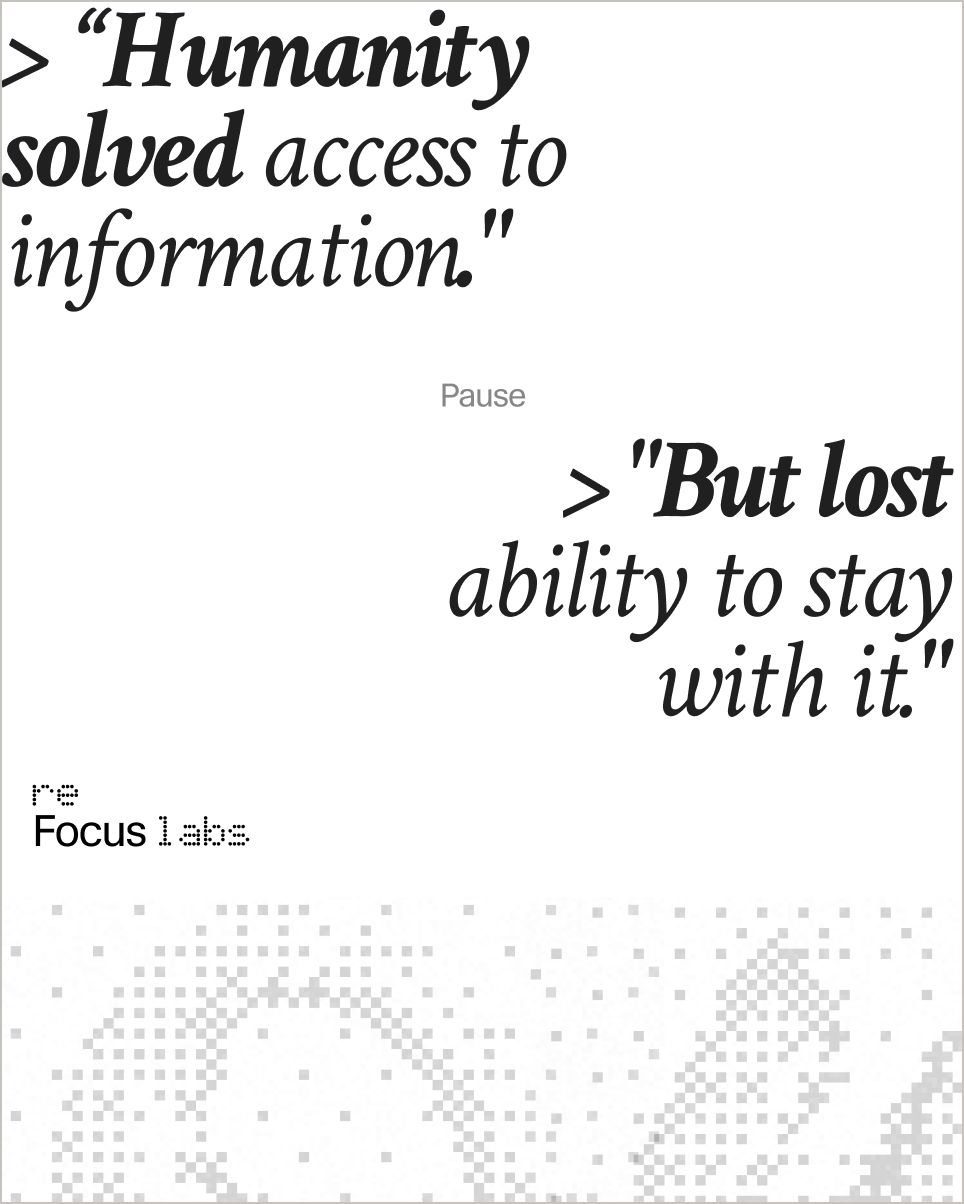
Humanity no longer struggles with access to information. Knowledge became instantly available through AI systems, adaptive interfaces, immersive media, and hyperconnected digital environments. Every generation grew up surrounded by continuous streams of content, notifications, predictive entertainment, and algorithmically optimized stimulation. Over time, this permanently changed the way people interacted with attention itself.
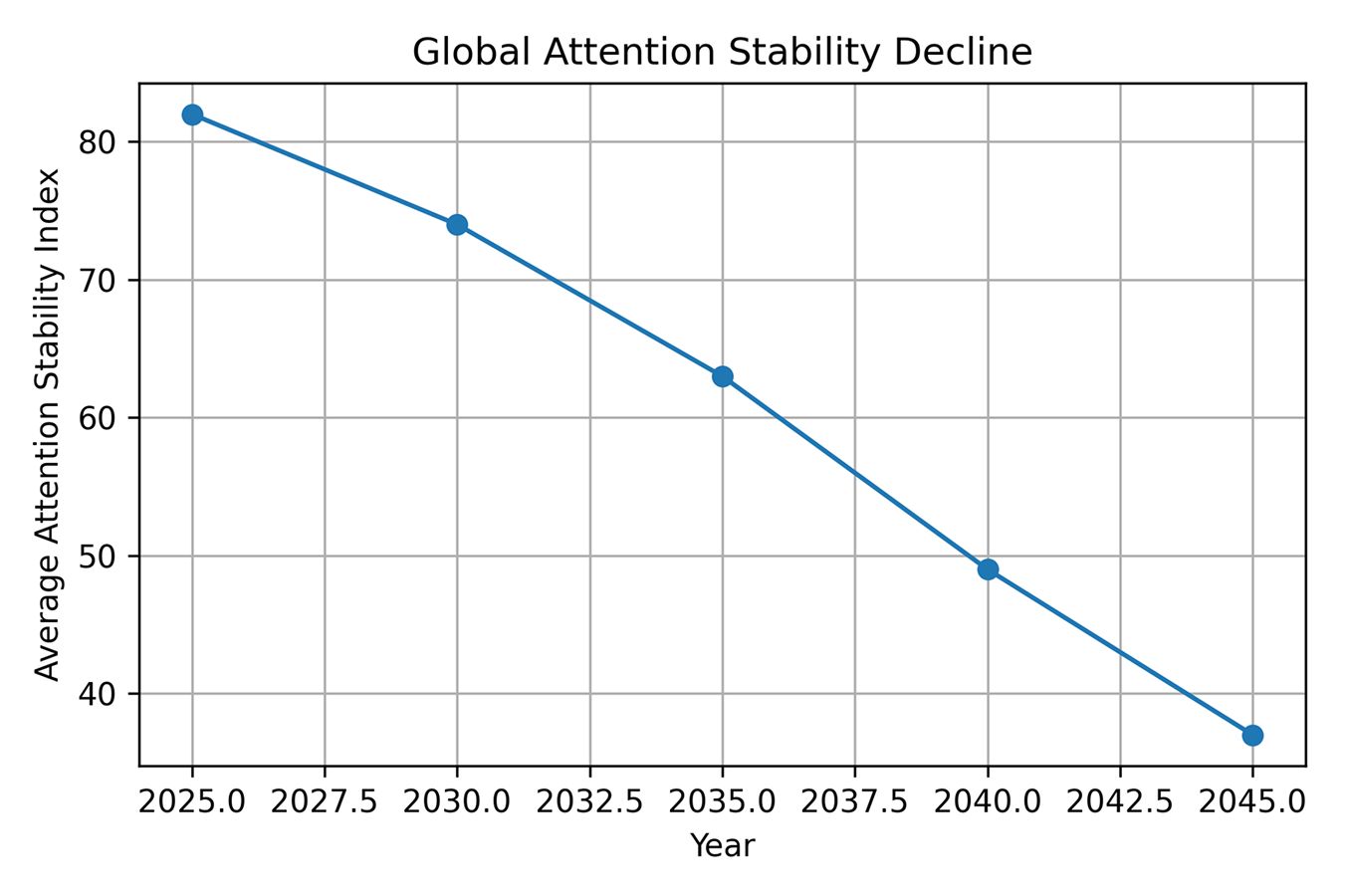
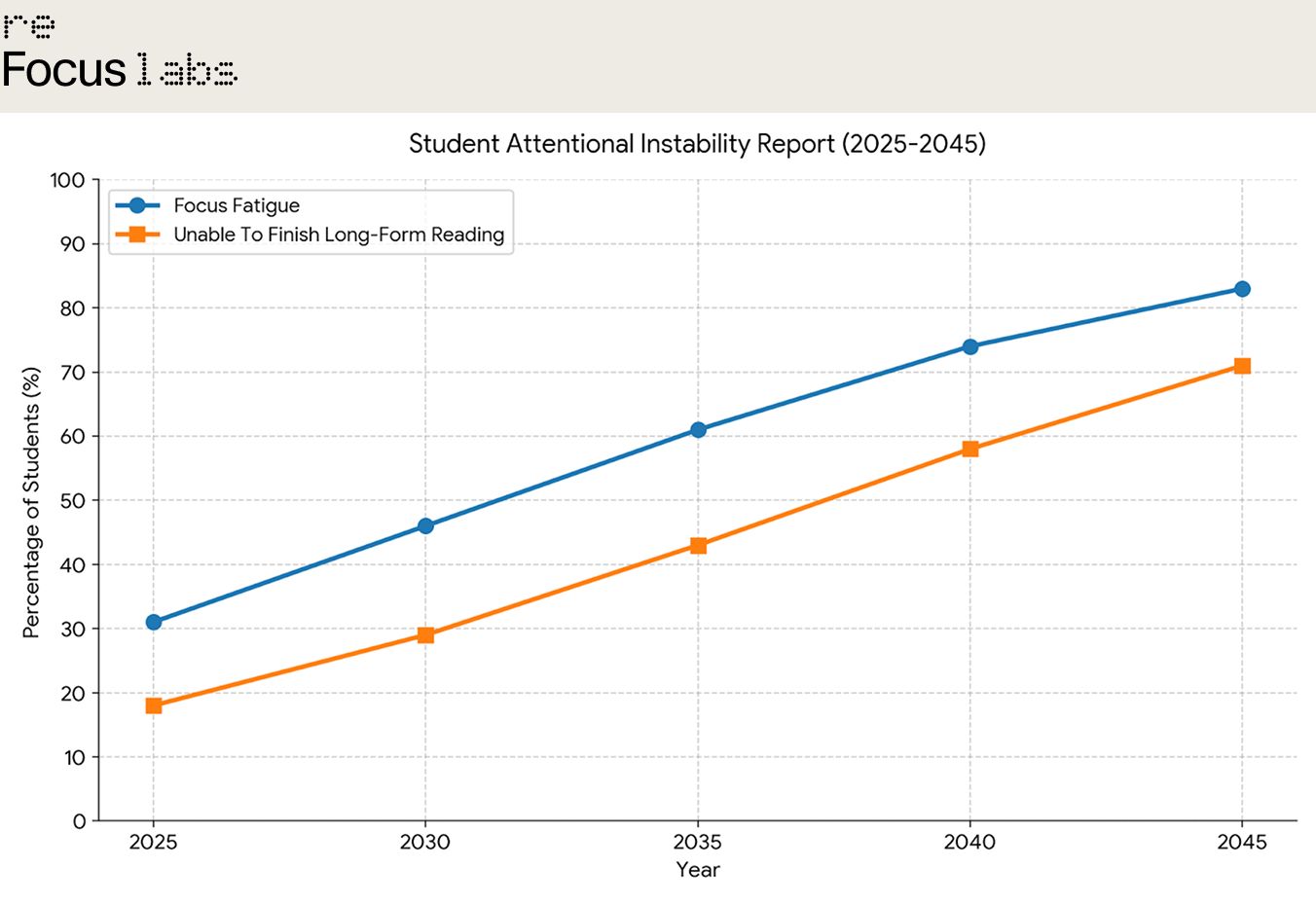
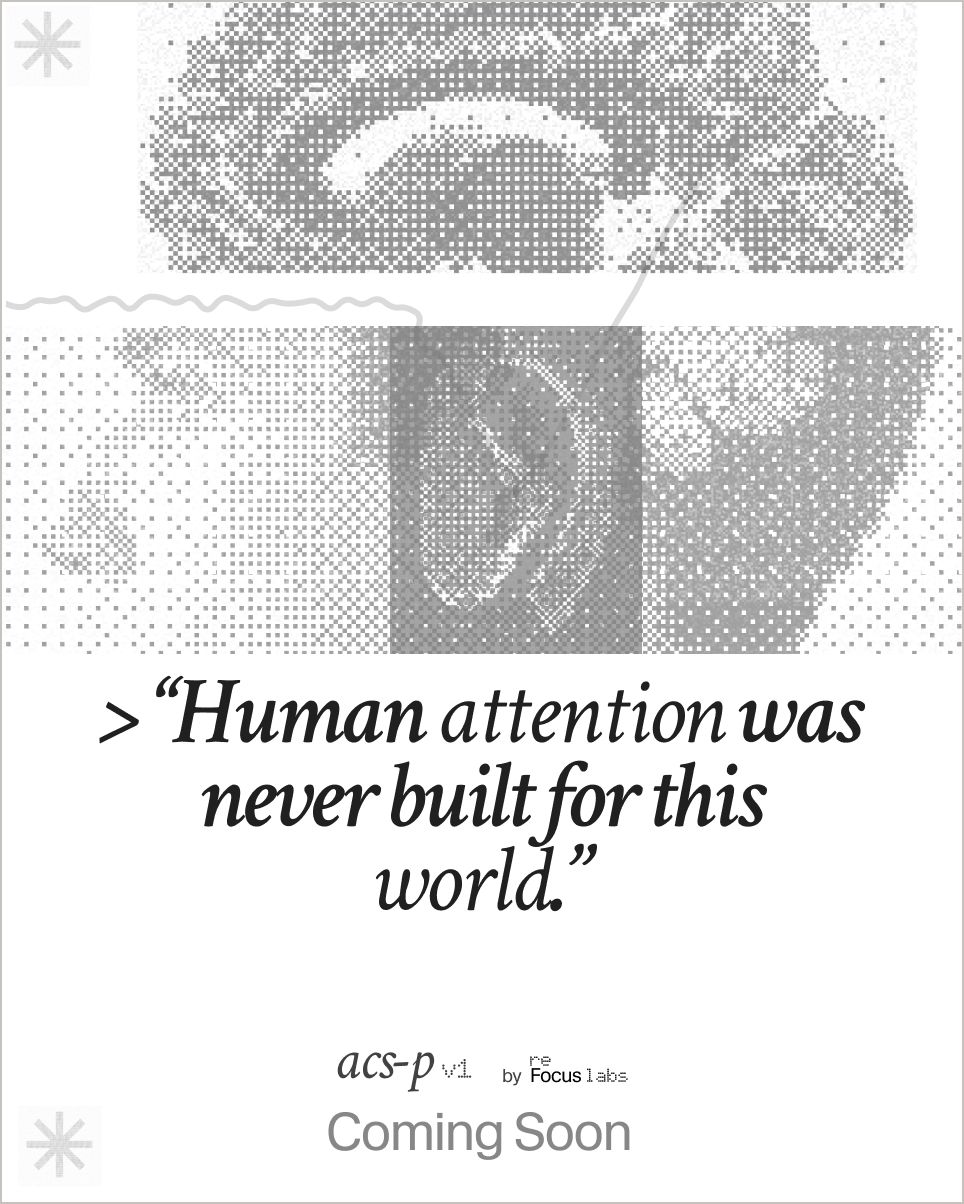
Children raised inside these environments gradually adapted toward rapid switching, shallow processing, and constant stimulation rather than sustained concentration. By early adulthood, uninterrupted focus became increasingly difficult to maintain. Reading long-form text felt mentally exhausting. Deep thinking declined. Memory retention weakened as AI retrieval systems slowly replaced active recall and reflective learning. Universities and research institutions began reporting widespread attentional instability among students. Many struggled to sustain focus during lectures, research, or even basic reading sessions. Silent study spaces disappeared from campuses. Attention fragmentation became normalized rather than exceptional.
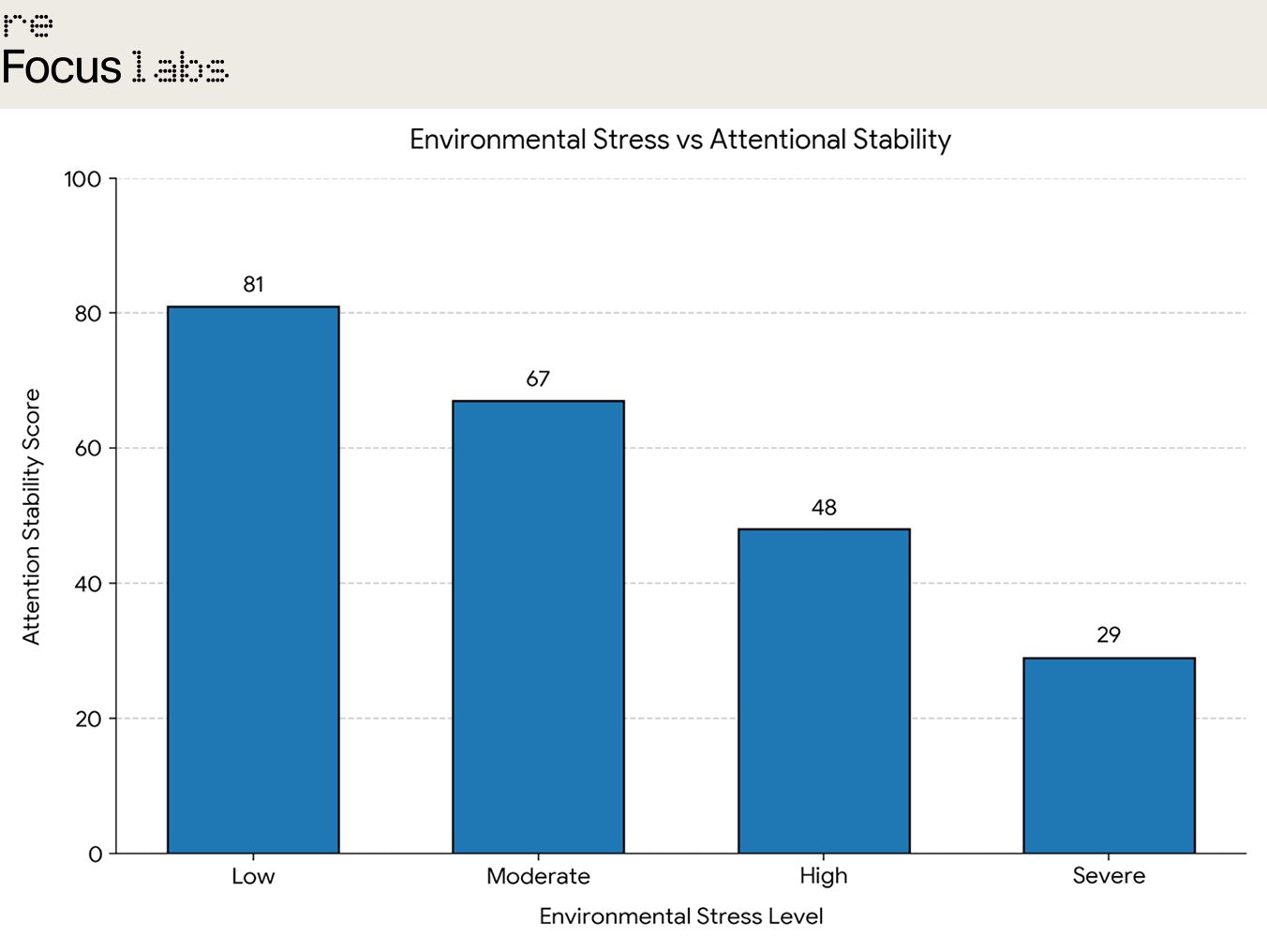
At the same time, environmental conditions worsened the situation further. Poor air quality, rising urban temperatures, artificial lighting exposure, chronic stress, disrupted sleep cycles, and continuous sensory overload placed additional pressure on already overstimulated neurological systems. Neuroscientists later identified several biological mechanisms behind this decline, including dopamine downregulation, prefrontal fatigue, disrupted sleep architecture, and long-term neural desynchronization.
The brain had not completely failed. It had simply lost its ability to maintain stable attentional rhythms inside accelerated environments.
As focus became increasingly fragile, society slowly reframed attention as protected cognitive infrastructure rather than passive biological ability. Rehabilitation clinics, neural wellness centers, low-stimulation learning environments, and cognitive recovery programs began appearing globally.
Within this cultural shift, ReFocus Labs emerged as one of the most influential neurocognitive companies of the decade. Founded by a biohacker and cognitive researcher, the company initially gained recognition through rehabilitation programs designed for students, researchers, and knowledge workers experiencing severe attentional instability.
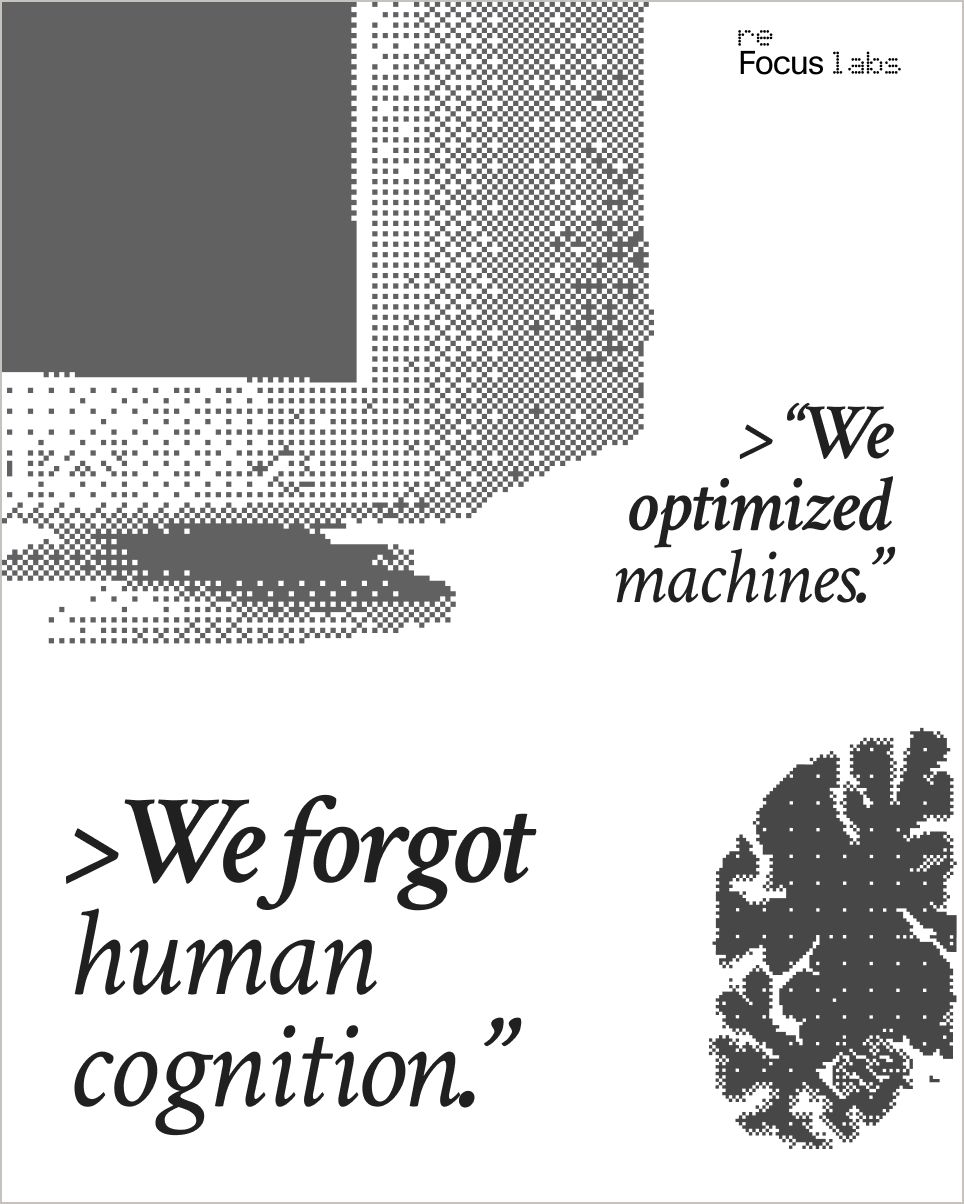
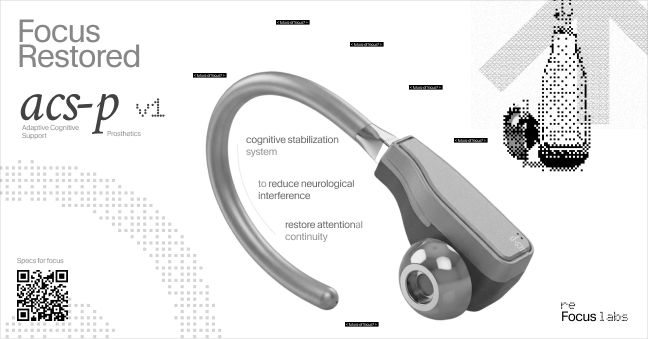
Unlike traditional productivity companies focused on optimization and efficiency, ReFocus Labs approached the problem differently. The company argued that technological acceleration had evolved faster than human cognition could biologically adapt. Their philosophy centered around cognitive preservation rather than enhancement. According to ReFocus Labs, future intelligence did not require more stimulation. It required stabilization.
fD — Focus Debt
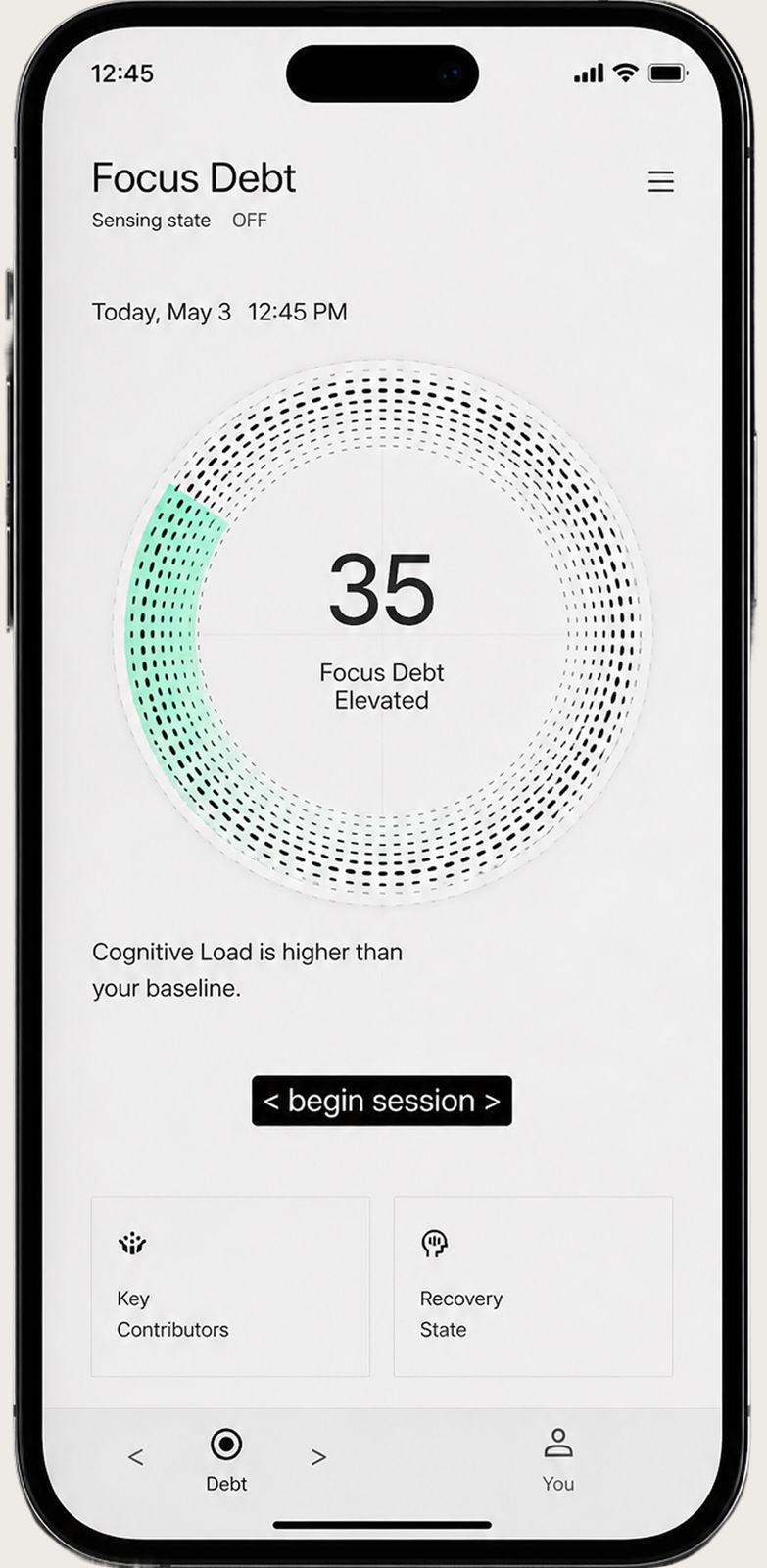
One of the most influential concepts introduced by ReFocus Labs became “Focus Debt.” Focus Debt referred to accumulated neurological fragmentation caused by chronic overstimulation, interrupted cognition, excessive context switching, fragmented media consumption, and insufficient recovery periods.
Every prolonged period of infinite scrolling, multitasking, notification exposure, AI dependency, and hyper stimulating digital behavior gradually increased cognitive instability and neural fatigue. Over time, users experienced brain fog, attentional drift, reduced reading endurance, memory instability, and difficulty sustaining long-form reasoning. Rather than treating focus as productivity metric, ReFocus Labs reframed attention as recoverable cognitive endurance.
ACS-P continuously estimated Focus Debt accumulation patterns and helped users gradually rebuild attentional stability through sustained focus sessions, reduced sensory interference, healthier recovery cycles, and improved interaction habits with technology. The company emphasized one important distinction repeatedly: ACS-P did not erase Focus Debt instantly. It created the conditions necessary for gradual recovery.
Life after ACS-P
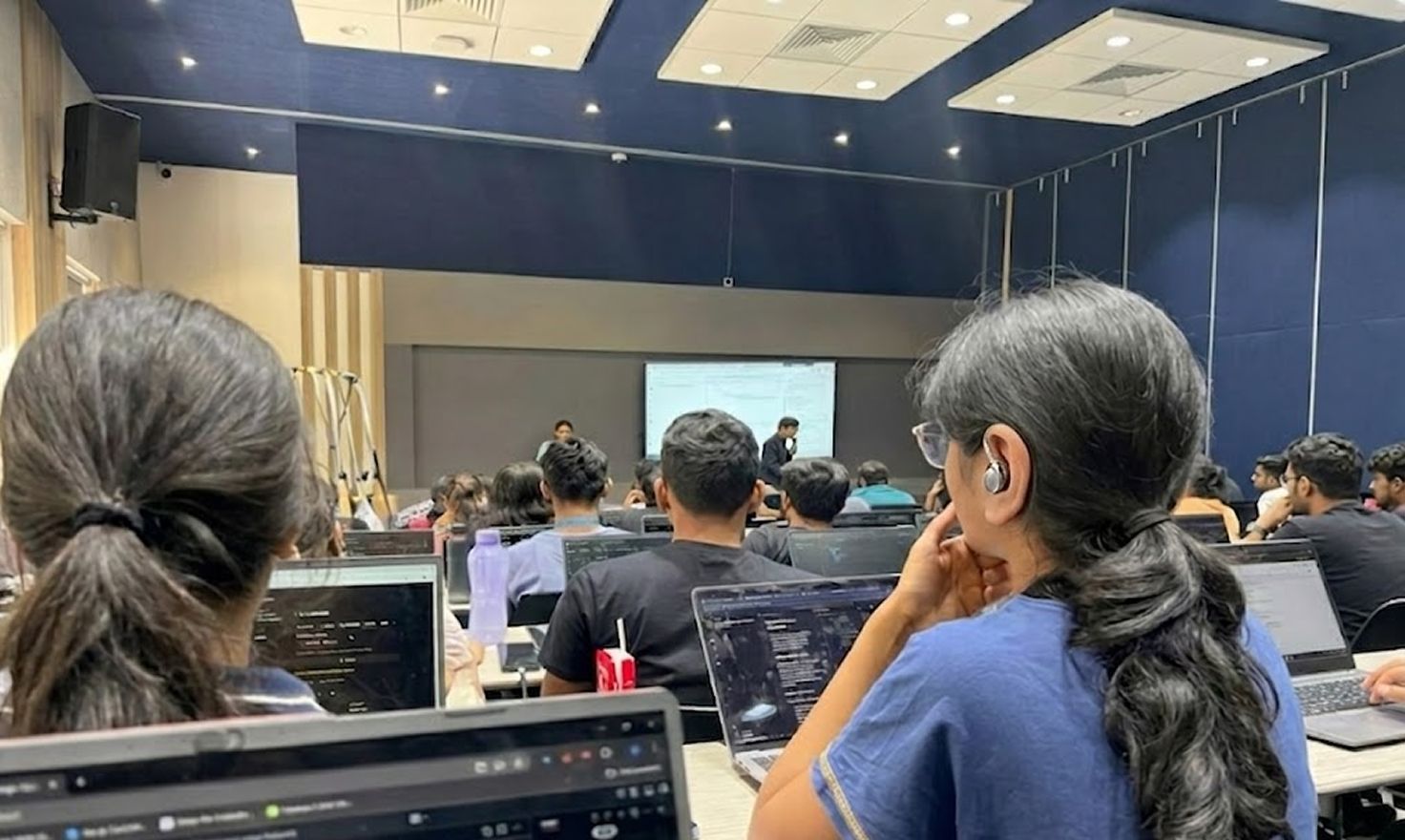
Following launch, ACS-P quickly gained popularity among students, researchers, parents, and knowledge workers struggling with attentional instability. Universities began testing low-stimulation classrooms integrated with ACS-P-assisted cognitive recovery systems. Libraries introduced attentional recovery zones. Rehabilitation clinics adopted the device within focus-restoration programs.
Parents increasingly used ACS-P for children raised inside hyperconnected digital environments. Knowledge workers used the wearable during deep-focus sessions and neural recovery periods. Cognitive wellness industries expanded rapidly around attentional health, neural stabilization, and sustainable interaction with AI systems.
Public response remained divided. Supporters viewed ACS-P as necessary adaptation helping human cognition survive inside accelerated digital civilization. Critics argued that technologies like ACS-P normalized cognitive decline rather than addressing the environmental systems causing it in the first place. Despite ongoing debates, a cultural shift became undeniable. Focus transformed from passive biological ability into actively managed cognitive resource.
“Future intelligence did not require more stimulation. It required stabilization.”
attention, cognition, overstimulation, AI-assisted learning, wearables, industrial design, worldbuilding

Sandeep Rabha
Speculative Design studio
Studio 2026 · Department of Design
Aniket Sharma
Speculative Design studio
Studio 2026 · Department of Design