Media Lab
Department of Design, IIT Guwahati
Projects / Speculative Design / Sporenet
Mycelium Sensing to Protect Communities

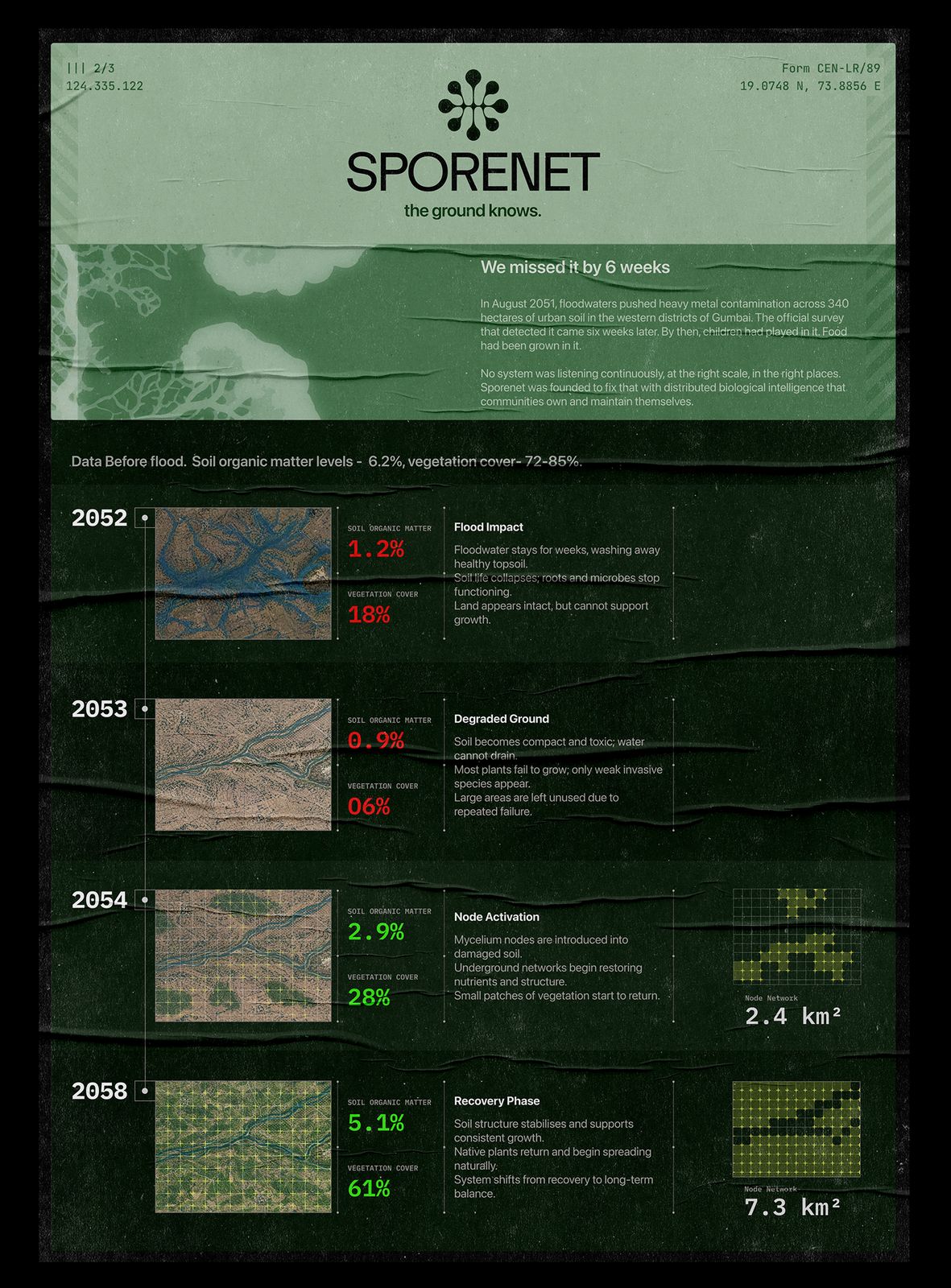
In the year 2051, floodwaters pushed heavy metal across 340 hectares of urban soil in the western districts of Jalad. An official survey that detected it came six weeks later. By then, children had played in it, food had been grown in it.
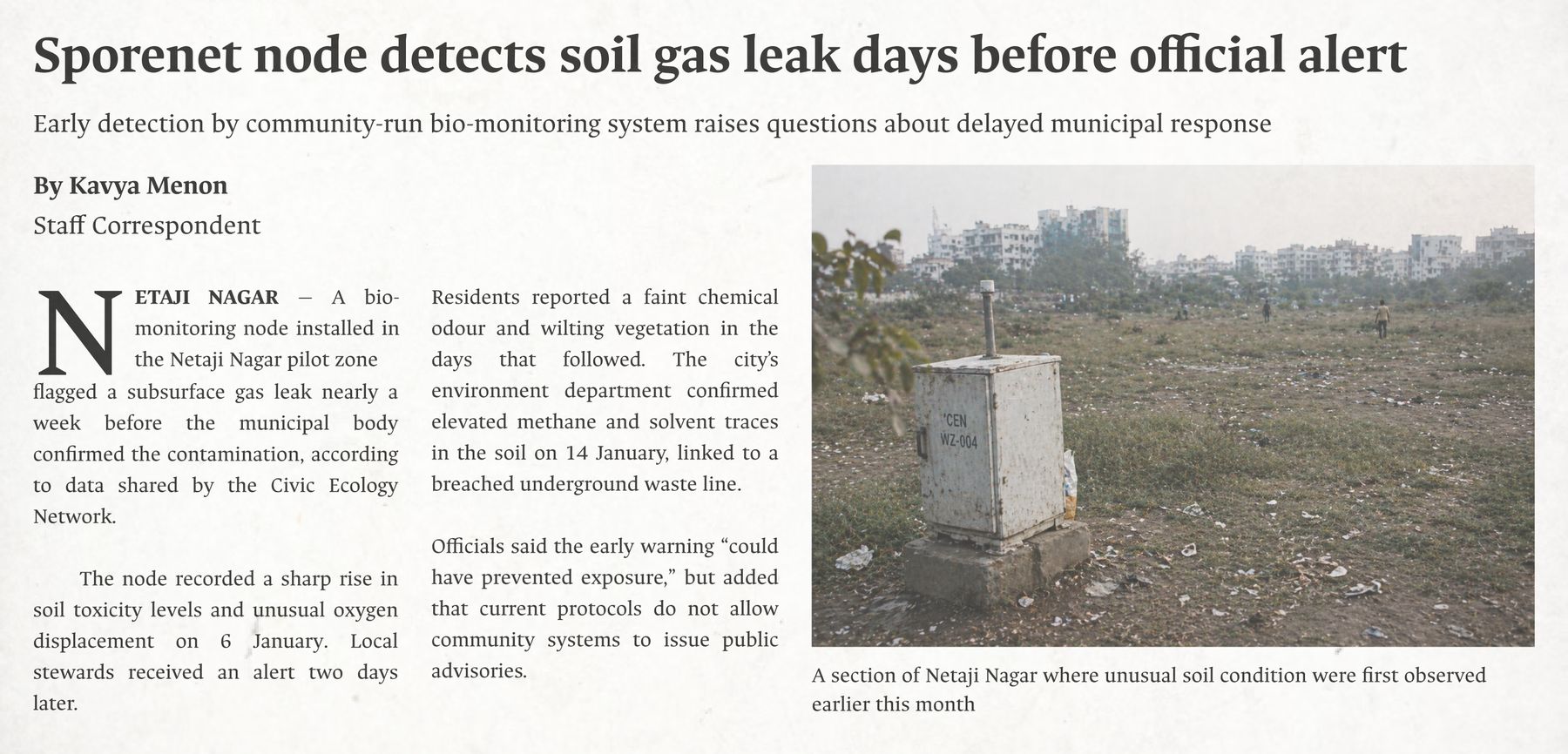
No system was listening continuously, at the right scale, in the right places. No entity had its interests in maintaining vegetation and soil health. Sporenet was founded to fix that with distributed biological intelligence that communities own and maintain themselves.
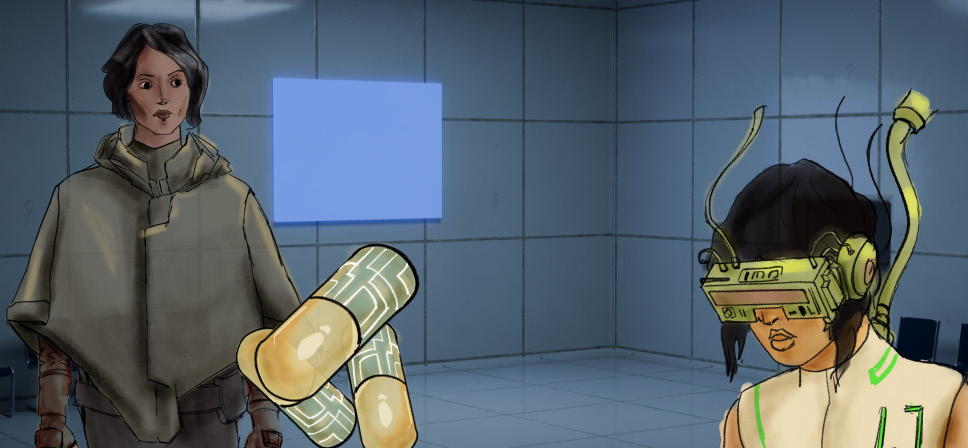
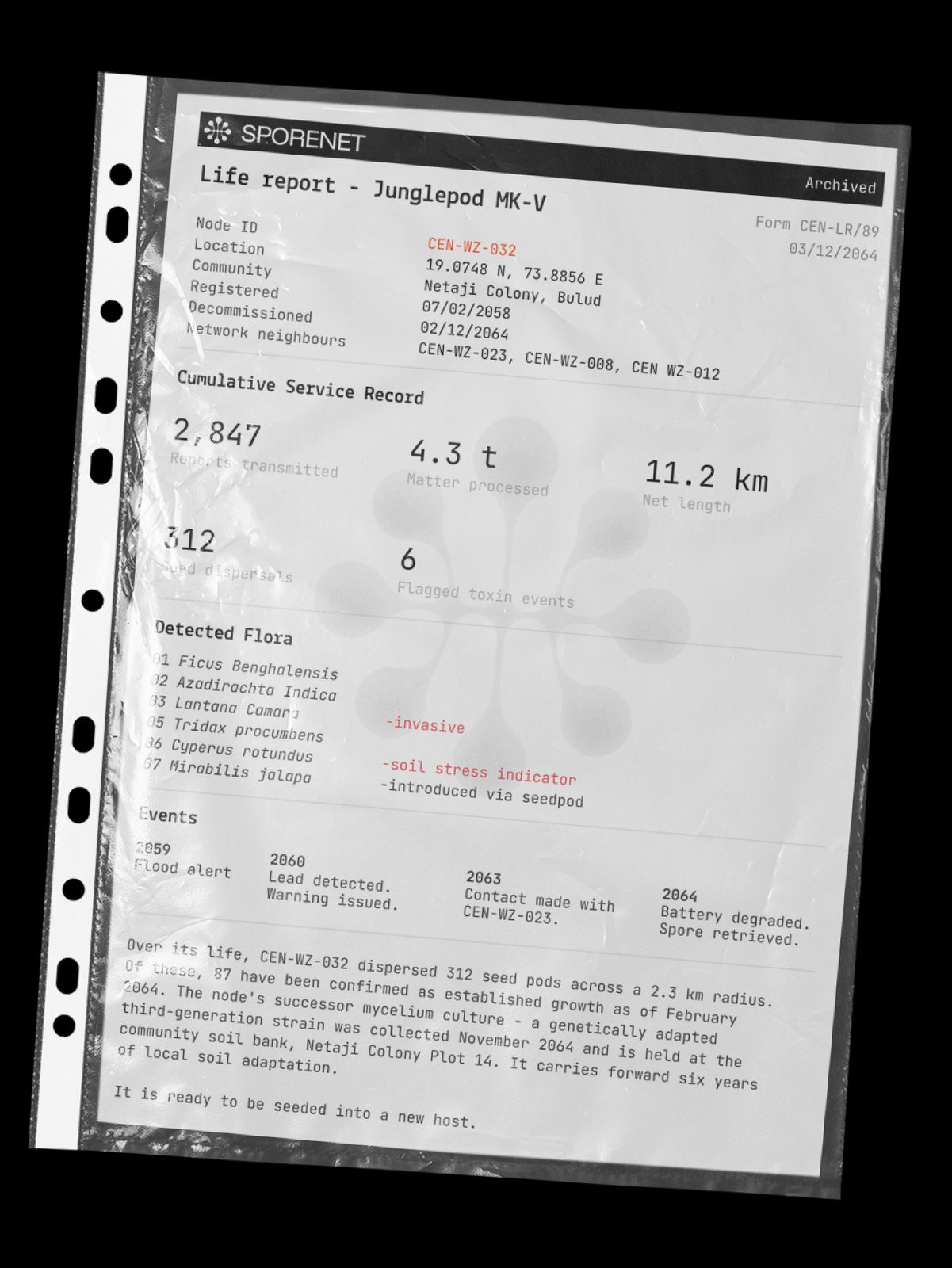
The lab was a team working on mycological computing and sensing, three years before the incident. In 2054 the team created the first iteration of the Sporenet node - a simple device with a transmitter, solar battery and a bioengineered mycelium seeding pod. With the help of the communities affected by the flooding and arid soil, the team installed nodes across the region. By 2054 multiple protective forests emerged from the unforgiving conditions. It was considered a miracle of man and nature.
“Sporenet — the ground knows.”
mycelium, biosensing, soil health, community infrastructure, flooding, civic ecology
Amogh W.
Speculative Design studio
Studio 2026 · Department of Design
Pratham Dev
Speculative Design studio
Studio 2026 · Department of Design
Vismay K. Nair
Speculative Design studio
Studio 2026 · Department of Design
Yukeshvar K.
Speculative Design studio
Studio 2026 · Department of Design