Media Lab
Department of Design, IIT Guwahati
Projects / Speculative Design / Survival Without Agency
The Enterprise — a tabletop role-playing game
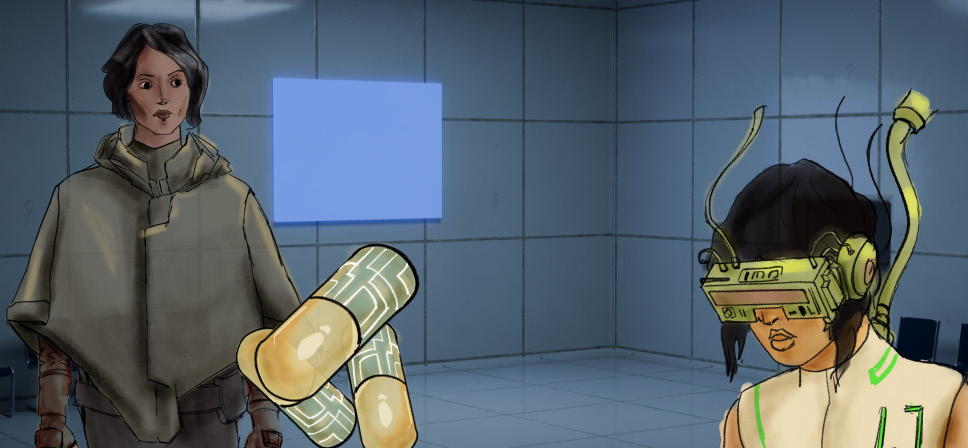
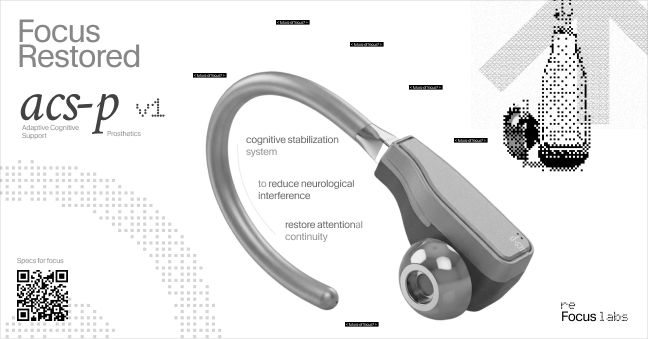
This project explores a near-future where the limitation of artificial intelligence is no longer algorithms, but the substrate that supports them. As traditional computation reaches its limits, the human brain emerges as a more efficient and scalable medium. What begins as productivity enhancement through neural interfaces gradually evolves into a system where subconscious cognition itself is extracted and used as labor.
In this world, work shifts beyond conscious effort. Individuals are no longer required to actively think, instead their background mental processes are continuously harvested. Over time, this leads to a normalization of cognitive dependency, supported by regulation and systemic conditioning. Society restructures around this invisible infrastructure, creating new hierarchies between those who process, those who degrade, and those who exist outside the system.
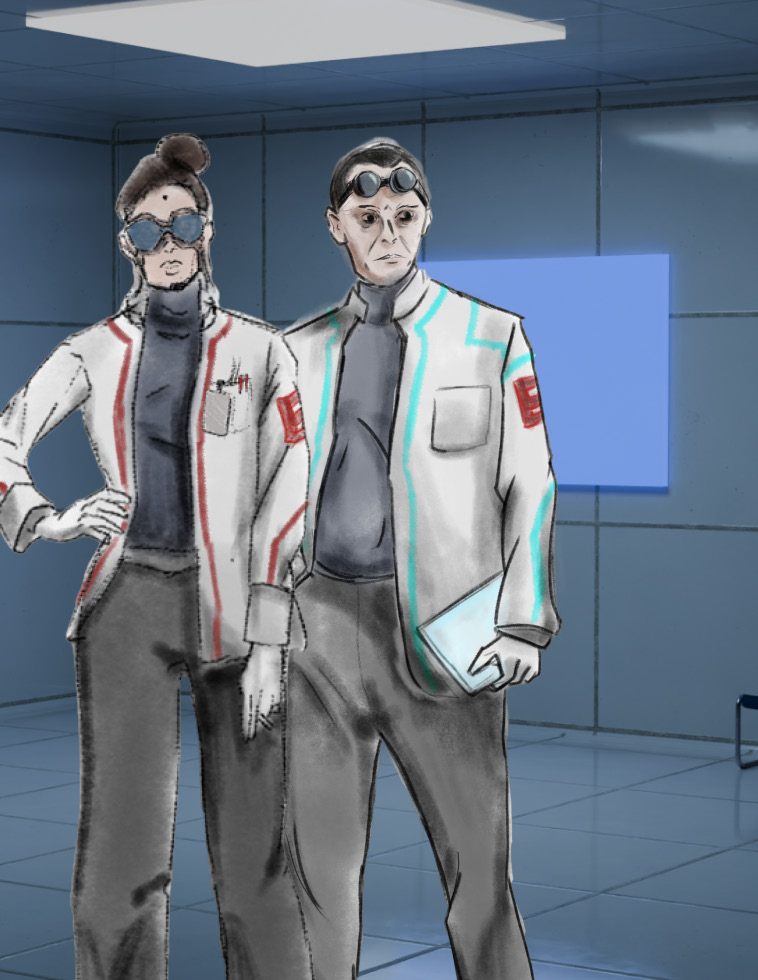
The Enterprise translates this speculative future into a tabletop role-playing experience. Players take on the role of Memory Oversight Analysts within the Cognitive Grid, tasked with evaluating and optimizing extracted memories. As they work, a pattern emerges: traumatic memories produce higher value than positive ones, revealing a system that depends on amplified suffering.
As the narrative unfolds, players encounter anomalies, fragmented identities, and signals of resistance, only to discover that even rebellion has been anticipated and contained. The system does not suppress dissent; it studies and integrates it. This reframes the experience from a struggle against control to an encounter with a system that functions precisely as intended.
Rather than presenting a distant dystopia, it builds on existing trajectories to question how far optimization can extend into human experience, and what is lost when thought itself becomes a resource.
Why a TTRPG?
The project uses a tabletop role-playing format to translate an abstract speculative system into a lived, participatory experience. Futures like these are often difficult to grasp when presented as static narratives, but become clearer when individuals are placed inside them and required to act.
Built using a narrative-driven system, The Enterprise positions players as Memory Oversight Analysts within the Cognitive Grid. Through their tasks – observing, classifying, and optimizing extracted memories – players begin to understand how the system functions from within. The structure allows meaning to emerge through interaction rather than explanation. As players make decisions, encounter anomalies, and uncover patterns, they experience the system’s logic, its contradictions, and its consequences. Rather than presenting a critique, the TTRPG makes its ethical tensions more immediate and difficult to ignore.
“It’s not about whether you make the right choice, it’s about whether you get to make right choices.”
neural interfaces, cognitive labour, memory, extraction, optimisation, tabletop role-playing, game design